
Let me be honest with you: I have six animals, and I love every single one of them, and I have still said "no" to more animals than most people will ever consider owning. That sounds like a contradiction, but it's the very first multi pet household tip I give to anyone who looks at my herd and asks how I do it. The answer is that I know exactly where my limits are, and I've learned — sometimes painfully — that love for animals and capacity for animals are two completely different things.
The Full House
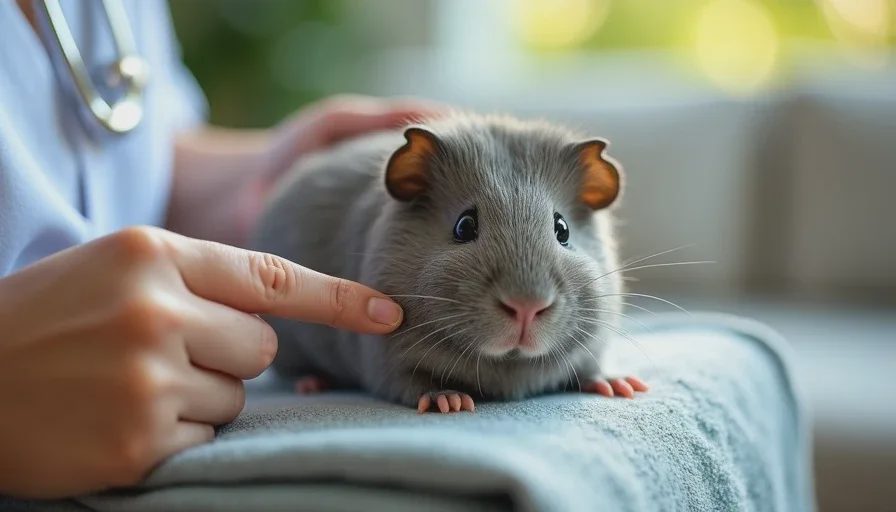
Here's my crew, in case you're new here. There's Biscuit and Copper, my two cattle dogs. Mabel and Oscar, the cats who tolerate each other in a way I can only describe as "professional courtesy." Peanut, the senior guinea pig who has outranked every single creature in this house for years, including me. And then there's me — Willa Sutter, DVM, 41 years old, married to Adam, mother of Ruby and Otis, and occasionally the only thing standing between a chicken-owning impulse and a backyard full of birds.
This house works, but it doesn't work by accident. It works because we have rules, budgets, and an ironclad policy of honestly asking "can we actually do this well?" before we say yes to anything new. And that question — the honest one, not the hopeful one — is the whole secret.
The questions I run through before any new animal joins us:
Space. Do we have a quiet corner that this animal can call their own, with zero competition for it?
Time. Not just love, but literal hours. Vet care, training, cleaning, play. Where do those hours come from?
Money. Emergency fund included. Not the optimistic math, the realistic math.
The existing crew. Does adding one animal stress out the ones we already have? Peanut has veto power, and we honor it.
Why do I want this? Am I rescuing, or am I collecting?
That last question is the uncomfortable one, and it's the one I almost never see in the articles about adding pets. Because the uncomfortable truth is that some of us — and I say this with full affection for every pet person I've ever met — use animals to fill something that animals can't actually fill.
When Saying Yes Felt Like Saying No
I'll give you a real example. A few years ago, a friend of a friend asked if I'd take in a senior cat whose owner had passed away. Every part of me wanted to say yes. The cat was gentle, well-behaved, and had no one else. And I looked at my two dogs, my two cats, my guinea pig, my two kids, my 60-hour clinic weeks — and I said no.
That was one of the hardest "no"s I've ever said, and also one of the most correct. I knew the honest math: Oscar is eleven, he's set in his ways, and he starts stress-grooming when his routines change. Bringing in a new cat would have cost Oscar weeks of anxiety, me a chunk of sleep, and that poor senior cat a home that wasn't truly ready for them. Instead, I helped her network find a quieter single-pet home — a home that was actually a yes for that cat, not a yes that was really a no in disguise.
That's the thing nobody tells you about setting boundaries: a no that protects everyone is kinder than a yes that works for no one. A good start beats a late fix. That phrase is my whole philosophy, and it applies to adding pets just as much as it applies to training a puppy. You can't fix your way out of an overcrowded house — the fix is not getting there in the first place.

The Wisdom of Limits
Here's a shift that changed everything for me: limits aren't the opposite of love, they're the structure that lets love actually function. When I say no to a seventh animal, I'm not saying no to that animal — I'm saying yes to the six animals I already made promises to. I'm saying yes to my kids, who deserve parents who aren't drowning in poop scooping. I'm saying yes to my marriage, which needs date nights that don't involve the emergency vet.
The data backs this up in a way that surprised even me. Shelters see a steady stream of "bites off more than they could chew" surrenders — the second dog who was supposed to be a companion but turned out to be a source of conflict, the puppy bought on a whim that outpaced the family's time. The most common reason pets get rehomed isn't that people stop loving them. It's that people stop being able to provide for them.
What limits actually protect:
What I say no to | What it protects |
|---|---|
A new pet I can't fund an emergency for | The pets I already have |
A pet that needs a lifestyle I can't provide | The pet itself, from an eventual rehome |
A "fixer" animal when my plate is full | My mental health and patience |
A breed mismatch because it's exciting | Everyone's safety and sanity |
I don't say any of this to make people feel guilty about wanting a full house. Wanting to care for animals is one of the most decent impulses a person can have. I say it because I've seen what happens on both sides of that equation, and I'd rather you make the decision from a place of honest planning than from a place of aching hearts.
Boundaries That Aren't Just About Numbers
Saying no isn't only about how many animals you own. It's about the day-to-day boundaries that keep a multi-pet household running. In our house, that looks like: no feeding scraps at the table (the dogs would unionize otherwise). No cat food where the dogs can reach it. No unsupervised guinea pig floor time, ever, no matter how much Peanut yells about it. And a hard rule that everyone gets their own quiet retreat — Mabel has the linen closet shelf, Oscar has the window perch, Biscuit has the crate he treats like a five-star hotel.
The multi pet household tips that actually work are almost never glamorous. They're boring systems, repeated daily, that mean nobody in the house has to feel crowded or threatened. When I walk into a house where every animal has a corner that is unmistakably theirs, I know I'm looking at an owner who has figured out the wisdom of limits.
What Saying No Has Given Me
I keep a kitchen whiteboard that tracks, in my husband's words, "who ate, who pooped, who's sulking." It started as a joke and became essential infrastructure — when you share a house with six animals and two kids, you track the small things so you catch the big ones. And I'll tell you what that whiteboard really represents: it's the visible proof that I have capacity for the animals I chose, and the discipline to honor that capacity.
Saying no to more animals has given me the ability to give the animals I have something close to my full attention. Peanut still gets his morning pea flakes and his weekly weigh-in. Biscuit still gets his fetch sessions. Oscar still gets his lap time without a dog licking his ear. I can do those things well because I'm not spread so thin that they become chores.
So if you're sitting there looking at your own house, maybe with two pets and a secret itch for a third, here's my honest advice: ask the uncomfortable questions first. Run the budget. Count the hours. Consult your existing crew. And if the honest answer is "not right now," let that be a complete sentence. The animals you have will feel the difference in your attention. The animal you said no to will find the home that's truly ready for them. And you'll be doing the hardest, most underrated work in all of pet ownership — the work of loving something enough to know your limits.




No comments yet — grab the first one.