
The first 48 hours after bringing home a new pet are the most important and the most confusing you'll have, and almost every new owner spends them doing the wrong things with the kindest intentions. Here's the honest version from someone who's watched this moment a thousand times: bringing home a new pet succeeds or fails on three things — quiet, routine, and patience. Everything else you're worried about right now, from "is he sleeping too much" to "should I introduce him to the neighbor's dog yet," can wait. If you focus on just those three things for two days, you'll be ahead of most of the families I meet in the exam room.
I'm Willa Sutter, DVM. I've helped families through this exact weekend for fourteen years, and I've lived it myself more than once — most recently when Copper, a yellow Lab puppy with no sense of personal space, arrived in a house already run by my husband Adam, our kids Ruby and Otis, the resident dog Biscuit, the cats Mabel and Oscar, and one grumpy senior guinea pig named Peanut. The first two days told us almost everything about how the first two months would go. And the biggest lesson from that weekend is one I repeat to every client. A good start beats a late fix.
The Only Three Jobs You Have in the First 48 Hours
Strip away all the advice, the forums, the well-meaning relatives, and here's what actually matters in the first two days.
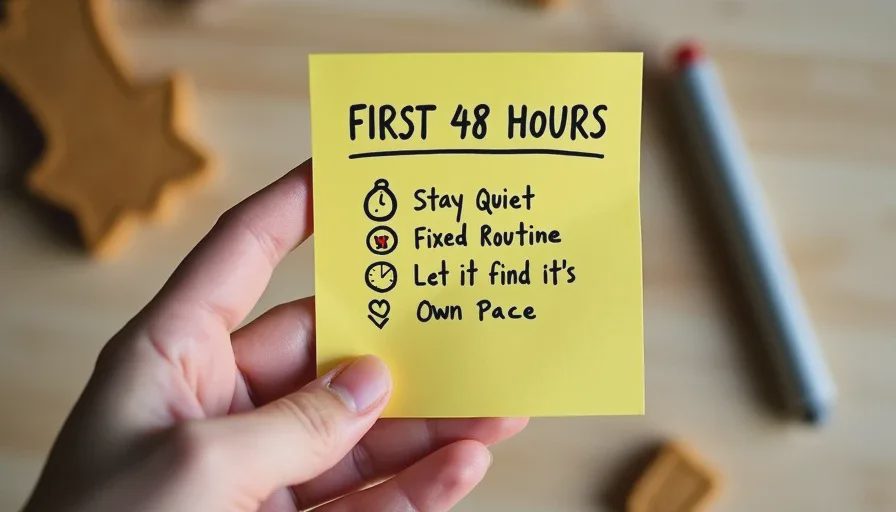
Job One: Keep It Quiet
The single most common mistake new owners make when bringing home a new pet is showing off the pet. The kids want friends over, the grandparents need to meet them, the neighbors "just want to peek." Here's the thing: your new pet just lost their entire known world. The shelter, the litter, their littermates, their people — it's all gone, and they're in a strange place with strange smells and strange faces. A parade of visitors in the first 48 hours tells them the world is a chaotic, unpredictable place. It isn't about being unfriendly; it's about letting the pet adjust to one room, one family, and one routine before the world gets added back.
At my house, we have a rule: new arrivals get two days of quiet before anyone outside the family meets them. Ruby and Otis learned it young, and it made every single introduction easier.
Job Two: Hold the Line on Routine
From day one, feed at the same times, potty on the same schedule, and bed at the same hour. Puppies especially thrive on a rhythm because it's the only way their brains make sense of "when do I eat, when do I go out, when do I sleep." I tell new owners to expect a lot of sleeping — new puppies and kittens sleep 18 to 20 hours a day, and that's normal, not a red flag. What looks like laziness is actually their system catching up on the stress of the move.
Job Three: Let Them Choose the Pace
Don't force cuddles, don't chase the cat under the sofa, don't hover over the crate. Let the pet approach you when they're ready, and reward every small approach with a calm, quiet "good." A pet that's allowed to explore at their own speed bonds faster than one that's grabbed and hugged on day one. Think of it like meeting a shy person at a party: you don't win them over by pinning them in a corner.
What to Ignore in the First 48 Hours (a Refreshing List)
Now the part that surprises people — the things you should deliberately not worry about. I've written this list to hang on the fridge, because in my experience, these four "problems" cause more midnight panic than real emergencies do:
A lost appetite for the first meal or two. Stress kills appetite in pets, the same as people. Offer food, and if they skip a meal, leave it down and try again in a few hours. Call the vet if they're still not eating after about 24 hours, but don't panic at hour six.
Hiding. A cat under the bed or a puppy in the corner is normal on day one. It's not rejection; it's assessment. Leave the hidey-hole alone and let them come out on their own schedule.
Messy first nights. Whining, crying, or a potty accident at 2 a.m. is a new puppy working through a strange, lonely night — not a failing on your part. That's why the crate and the routine exist: they build a safe pattern faster than guilt or frustration ever will.
Weird sleep patterns. New puppies crash hard and wake wired. A puppy that sleeps 18 hours and then zooms around the kitchen at 9 p.m. is doing exactly what a puppy does.
The Two Things You Should Not Ignore
To be clear, "ignore" has a limit. Two things warrant a real check-in with your vet in the first 48 hours:
Situation | What to Do |
|---|---|
Repeated vomiting, diarrhea that goes beyond soft stool, or a pet that won't drink water | Call the vet the same day — dehydration comes on fast in young animals |
No appetite for more than 24 hours, or a pet that won't get up to move | Call the vet — this crosses from "adjusting" into "worth checking" |
Those two exceptions don't contradict the list above. The difference is time and pattern: adjustment is short-lived and self-corrects; these patterns persist and worsen. When in doubt, you know my number — that's what I'm here for.

The New Puppy First Week: What Day One Actually Looks Like
If you're bringing home a new puppy, here's what a realistic first day looks like, hour by hour, so you know what's normal:
Morning: Arrival, a calm hello in the yard or a quiet room, then straight to a potty spot. They'll almost certainly pee — mark that win.
Midday: A small meal at the same time you'll feed tomorrow. Then a lot of napping in the crate with the door open.
Afternoon: A short, gentle walk on the leash in the yard, a little play, another nap. No dog parks, no neighbors, no friend introductions — that's next week's job.
Evening: A quiet dinner for the family with the puppy nearby, a short potty trip, and an early, boring bedtime. The first night will likely include some whining; a warm water bottle wrapped in a towel near the crate can help a puppy that misses its littermates.
One warning that comes up constantly in my new puppy first week conversations: don't take the puppy to a dog park or pet store for the first week or two. Until the first couple of vaccine rounds are done, the risk of picking up something contagious at high-traffic dog spots is real and it's not worth the photo. Your own yard, your own house, and controlled introductions to healthy, vaccinated adult dogs are plenty.
Setting Up the Crate, the Bed, and the Safe Room: Where to Spend Your Energy
When you're bringing home a new pet, the wisest use of your first afternoon is setting up one calm basecamp. A crate with a soft bed and a covered top (dogs), or a quiet room with a litter box, food, and a hiding spot (cats), gives the pet a place that's entirely theirs. Put the food and water in a predictable spot, show them the potty spot, and then — this is the hard part — step back and let them explore it.
I tell owners to picture a safe room like a motel room on night one of a long trip: it's not the final destination, but it's where you sleep before you get your bearings. If you set up a good basecamp in the first 48 hours, you've built the foundation for the whole first month.
When to Call the Vet in the First 48 Hours (and When Not To)
If you're bringing home a new pet this weekend, let me give you the script I hand out — it's the difference between a calm weekend and a panicked one. Call the vet the same day if you see repeated vomiting, diarrhea beyond soft stool, no drinking, no appetite that stretches past a day, or any breathing that looks labored. Don't call (but do text a friend) about hiding, crying at night, one skipped meal, or a puppy that sleeps a lot — those are all normal adjustment behaviors. And on day one or two, book the follow-up visit for the new-pet exam, because we want a baseline on a healthy animal before any "is this normal" question comes up later.
There will be a moment in the first 48 hours when you're exhausted, the pet is wired, and you wonder if you've made a mistake. You haven't. Every single family I've ever worked with has had that moment, including mine. What separates the households that thrive is not being naturally good at this — it's choosing the three jobs, ignoring the noise, and giving the pet time. That's the whole secret, and it's a good one: a good start beats a late fix.


No comments yet — grab the first one.