If your cat launches at your ankles, grabs your hands, or bites during an apparently friendly cuddle, you are not raising a tiny household tiger. You are usually seeing normal predatory play aimed at the wrong target. The right cat toys for play aggression can move that energy toward chasing, grabbing, and kicking an object instead of your skin. A good start beats a late fix.
Why play aggression happens
Cats are built to stalk, chase, pounce, bite, and wrestle. Kittens learn bite control from littermates, but an early-weaned kitten or a cat that grew up without much play may not understand that human fingers are not prey. Indoor cats can also become especially intense when they have few chances to sprint and hunt.
Look for a pattern rather than judging a single incident. Play aggression often includes a crouched body, a twitching tail, wide pupils, silent staring, and a sudden leap. Your cat may hide behind a chair, chase moving feet, or wrap around your arm with the back feet kicking. Genuine fear or defensive aggression is more likely to include hissing, growling, flattened ears, retreating, or a stiff, tense posture. The distinction matters because fear requires more space and a different behavior plan.
Never punish a pounce with yelling, swatting, or a spray bottle. Punishment can make hands and people feel unpredictable, while failing to meet the hunting need underneath the behavior. Instead, quietly remove your attention and offer an appropriate outlet once your cat has settled.
The best cat toys for play aggression
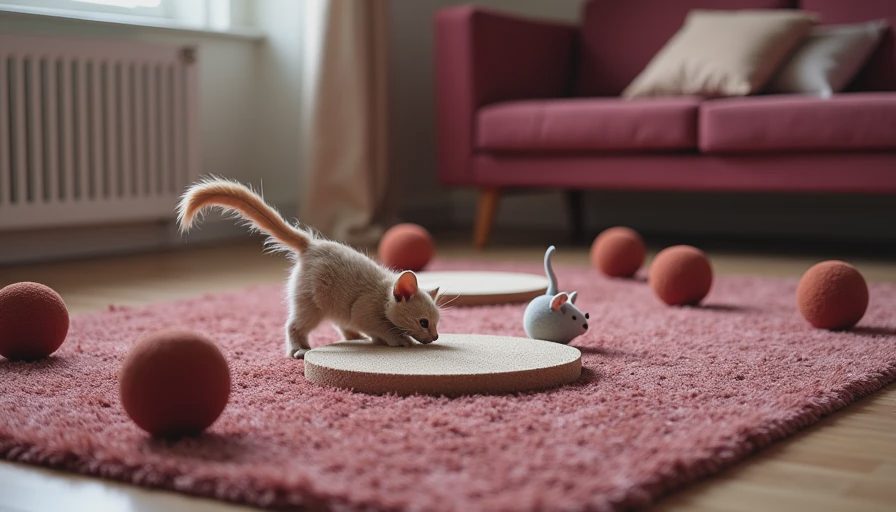
The most useful choices imitate distance and movement. A wand toy with a feather, fleece strip, or toy mouse lets you control the action while keeping fingers several feet away. Choose a sturdy wand with a securely attached lure; inspect it before every session because loose strings, feathers, and small parts can become choking or intestinal hazards.
Long kicker toys are another excellent option. These stuffed, tube-shaped toys give a cat something to hug with the front legs and bunny-kick with the back legs. Look for a size your cat can grip comfortably, with durable stitching and no beads, bells, or plastic pieces that can be pulled off. For cats that love to chase, small motorized toys or lightweight balls can provide movement without putting your hands in the game.
Food puzzles add a different kind of work. A treat ball, lick mat, or simple cardboard box with holes can encourage sniffing, batting, and problem-solving. These are not replacements for interactive play, but they help prevent the long, bored stretches that often end with an ambush at bedtime.
How to use cat toys for play aggression
A toy works best when you use it like a miniature hunt. Start by dragging or fluttering it slowly along the floor, then pause behind a table leg or box. Let your cat watch, stalk, and catch it several times. If the toy moves constantly, the game can become frustrating rather than satisfying. Finish by allowing a successful capture, followed by a small meal or a few treats. This sequence mirrors hunt, catch, and eat, which can help a cat relax afterward.
Schedule two or three sessions each day, beginning with five to ten minutes. Many cats need longer play, but short sessions are easier to repeat consistently. The most useful time is often before the household's usual trouble period, such as just before dinner or when everyone sits down to watch television. Keep cat toys for play aggression in a drawer and bring them out for supervised sessions so they remain interesting.
If your cat bites your hand, freeze rather than yanking away. Fast movement can make your hand more exciting. Once the cat releases, calmly stand up or place a barrier between you, wait for a few seconds, and redirect to a wand toy. Do not continue roughhousing with bare hands, even if the bites seem gentle today.
Build a safer home play routine
Rotate toys instead of leaving every item on the floor. Keep two or three options available and store the rest for a week or two. When a familiar mouse reappears, it may seem new again. A cardboard box, paper bag with handles removed, and a cat tree can also support stalking and climbing without a large shopping bill.
Teach children a simple rule: toys touch the cat, hands do not. An adult should control wand play, especially with a cat that becomes overstimulated quickly. Watch for tail lashing, skin rippling, ears turning sideways, or sudden vocalizing. Those are useful early warnings. End the session while the cat is still engaged, not after the first bite.
Inspect all cat toys for play aggression regularly. Throw away cracked plastic, unraveling fabric, detached eyes, and damaged elastic. Do not leave string, ribbon, fishing-line toys, or wand attachments accessible when nobody is watching. A supervised toy can be safe and enriching; the same toy left loose overnight can create a preventable emergency.

When toys are not enough
If the behavior suddenly appears in an adult cat, arrange a veterinary examination. Pain from dental disease, arthritis, skin irritation, or another medical problem can make handling unpleasant. A cat that stops eating, hides more often, cries when touched, or changes litter-box habits deserves prompt attention rather than a bigger toy basket.
You should also seek help when bites break skin, attacks are frequent, or the cat cannot disengage after play. Your veterinarian can look for medical contributors and recommend a qualified feline behavior professional when needed. Do not give a cat human calming medication, essential oils, or supplements without veterinary guidance.
For most healthy cats, the answer is not one magical product. It is a predictable routine, a distance-producing toy, appropriate supervision, and enough opportunities to chase and catch. Cat toys for play aggression are tools for teaching better habits, not punishment devices. Start with a wand and a kicker toy, schedule the game before the usual ambush, and praise calm behavior with food or quiet attention. With repetition, many families see fewer ankle attacks and more satisfying, organized play.




No comments yet — grab the first one.