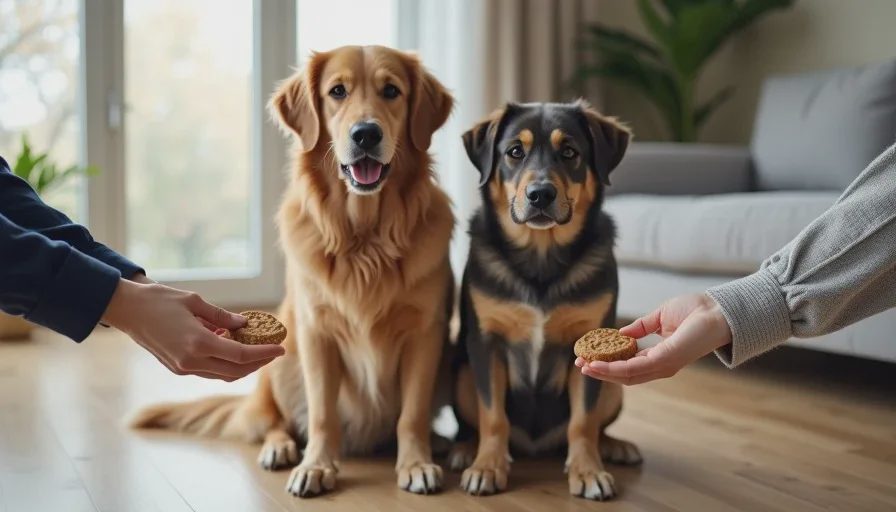
The single most common mistake I see when families add a second pet is rushing the introduction — putting two strange animals face to face in the first hour and hoping for the sitcom happy ending. It almost never works that way, and it can set the whole household back for months. Introducing a second dog to your first dog, or a new cat to your established crew, works when you treat the meeting like a marathon, not a sprint: separate spaces first, neutral ground second, and supervised face time only after everyone's calm. That slow intro protocol is the difference between two pets who tolerate each other and two pets who actually settle into a quiet household rhythm — and I've watched it work in exam rooms and my own kitchen, with the same cast of characters.
I'm Willa Sutter, DVM, and at home that cast includes my husband Adam, our kids Ruby and Otis, the dogs Biscuit and Copper, the cats Mabel and Oscar, and Peanut, a senior guinea pig who outranks everyone by right of being here first. Every one of them arrived through a version of the same plan I'm about to give you — sometimes with more whining than I'd like, but always without a serious fight. My own rule from fourteen years of multi-pet households is simple. A good start beats a late fix.
Why the Slow Intro Protocol Exists (and Why "Just Let Them Meet" Backfires)
Animals don't walk into a new home knowing the family rules. Your resident dog has a territory, routines, and a spot on the couch they consider theirs. A newcomer is, from their point of view, a stranger who appeared in the living room without warning. When two animals meet before they've had a chance to learn each other's smell, age, and energy, the natural result is fear — and fear reads as aggression. What looks like "they hate each other" is usually "they were never given a chance to say hello properly."
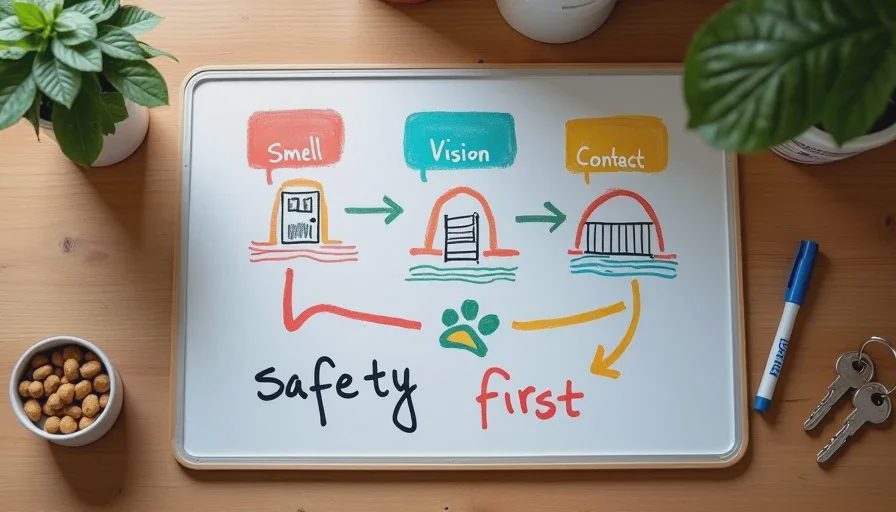
The slow intro protocol exists to solve exactly that problem, in three moves: smell before sight, sight before touch, and touch only when everyone's calm. Each step takes as long as the animals need — that's not a bug, it's the whole design. I've had introductions that moved through all three steps in three days, and I've had ones that took three weeks. The protocol doesn't have a timeline; it has an order, and the order is what protects everyone.
Phase One: Smell Before Sight (Days 1–2)
For the first day or two, the new pet stays in a separate room — the crate, a spare bedroom, or a gated-off corner — while the resident pet keeps their normal life. This does three jobs at once: it gives the newcomer a quiet basecamp to decompress, it protects your resident pet's routine from a sudden upheaval, and it starts the introduction process without either animal ever laying eyes on the other.
During this phase, trade scents daily. Swap blankets, swap beds, rub one animal with a towel and leave it in the other's space. Let them eat near the door — one bowl on each side of a closed door — so they associate the other's smell with something pleasant. What you're doing is building a mental file: "that smell equals food, safety, and no drama." That file is what carries them through the next phases.
What to Watch For in Phase One
Calm eating near the door is a green light to move on.
Mild interest or pacing is fine and expected.
Sustained growling, stiff posture, or refusal to eat near the door means pump the brakes — give it another day before moving forward.
Phase Two: Sight Without Touch (Days 3–5)
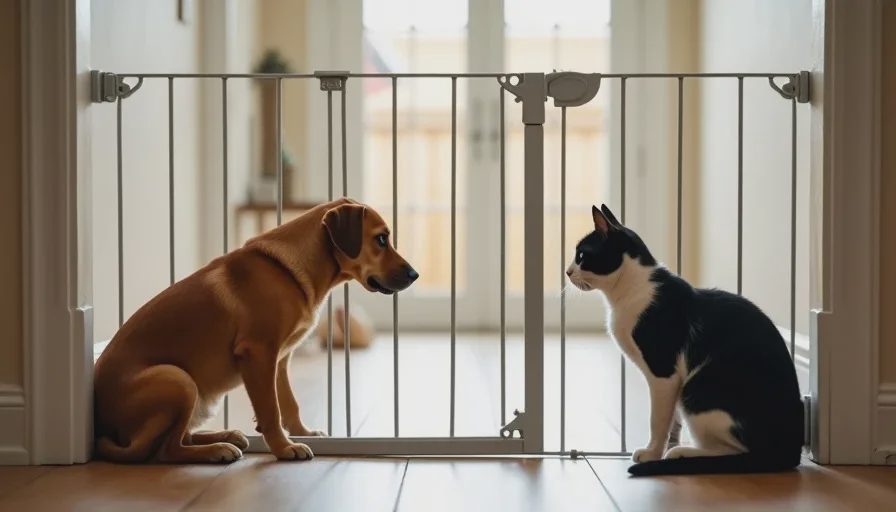
Now the animals can see each other, but they can't reach each other. This stage is the most tempting to skip when introducing a second dog, and it's the one to never rush. A baby gate, a glass door, or two people holding leashes with a room between them all work. The goal is a quick, calm glance, then a redirect to something else — a treat, a toy, a walk in the other direction. You are not staging a staring contest; you're teaching them that the sight of the other animal is boring and safe.
Walk both dogs at the same time, on leashes, at a distance, with a person holding each leash. Dogs who walk side by side without interacting are learning to coexist, which is a bigger deal than it sounds. For cats, use the gate-and-treat method: every time the cat on the other side appears, both cats get a treat. That rewires "another cat" from threat to jackpot.
The Green Light Test
You're ready for Phase Three when both animals can see each other without drama for a few minutes — maybe some curious sniffing in the air, maybe a bit of stiffness at first, but no growling, no hackles, no screaming match at the gate. If either animal can't hold that calm, go back to Phase One for another day. There's no shame in repeating a step; that's the protocol working, not failing.
Phase Three: First Touch (Days 5–7, if Phase Two Went Well)
The first actual meeting should be short, supervised, and structured — especially when introducing a second dog, because both dogs already have strong opinions about their home turf. Here's the setup I use:
Two calm, leashed animals, two adults, neutral territory — a friend's yard, a park path, or a room neither pet uses daily.
Keep the leashes loose, and keep moving. Walking past each other at a distance, then crossing paths closer, teaches that proximity is no big deal.
Allow a brief, sniff-each-other pass. Three to five seconds of sniffing is plenty for a first hello. Then call them apart and reward both with treats.
End the meeting while it's still going well — five to ten minutes, not an hour. A short, positive first meeting beats a long, tense one.
For cats, the first touch works well through a gate or a crack in the door first, with treats on both sides. A face-to-face free meeting between cats should wait until both are relaxed through the barrier; then you supervise the first free meeting with a hand towel ready to separate them and a room to escape to.
What NOT to Do at First Touch
Don't hold one pet in your arms to "make them meet." Restrained animals feel trapped, and trapped animals bite — including the one in your arms.
Don't let them meet over food bowls, toys, or bones. High-value resources turn a hello into a fight, and fights in the first week teach a hard habit to unlearn.
Don't punish growling or hissing at this stage. That's the animal saying "I'm uncomfortable," and a growl that gets punished is a growl that gets skipped next time — right before a bite. Calmly separate, and let the pace slow down.
Multi-Pet Household Tips: Managing the First Month
The first month after introducing a second dog is where the real work happens — and the same management applies if your newcomer is a cat, a kitten, or a different species entirely. It's mostly about management, not miracles. Here's the short list of what actually keeps the peace:
Feed separately, at least for a while. Separate rooms or gated areas, at the same time. Resource guarding is one of the most common problems I see in multi-pet households, and preventing it is far easier than treating it. (If you're already seeing growling over food, that's a topic for your vet and a trainer — early, before it hardens.)
Guard the high-value stuff. Bones, chews, and toys go out when you're around to supervise, and go away when you're not.
Give each pet its own space. Every animal in your house should have one spot that's just theirs — a crate, a cat tree, a bed in a quiet corner — where the other pet isn't allowed to follow. That's their off-switch, and they'll use it more than you'd think.
Protect the original routine. The resident pet didn't sign up for a roommate. Keep their walks, feeding times, and couch privileges exactly as they were, and give them extra attention. Jealousy in pets is real, and it usually wears the costume of a behavior problem.
And that's especially true when the newcomer is a different species. Introducing a dog to a cat, or a second cat into a cat-only home, follows the same smell-sight-touch order, with one extra rule: always give the cat a high, unreachable escape route. A dog that learns "the cat runs up the shelf and that's the end of it" is a dog that stops chasing; a cat with no escape route is a cat that fights.
The Signs That Tell You It's Working (or Not)
How do you know introducing a second dog is actually working? Look for these signals over the first month:
Working Well | Needs Help |
|---|---|
They can share a room without staring each other down | Any meeting ends in a fight or sustained growling |
They choose to lie down near each other | One pet is constantly hiding or refusing to eat |
Eating, sleeping, and bathroom habits stay normal | Either pet's appetite, sleep, or energy drops off |
The resident pet keeps their normal personality | The resident pet suddenly becomes withdrawn or clingy |
If you see the "needs help" column, it doesn't mean failure — it means the pace was too fast, or there's an underlying problem like resource guarding that deserves professional eyes. That's a call to your vet and a certified trainer, not a resignation to "they'll never get along." I've seen plenty of households fix a rocky start with the right help.
The Finish Line Is Quiet, Not Cuddles
Here's the goal to hold in your head: you're not aiming for a viral video of two pets cuddling. You're aiming for a household where everyone can eat, sleep, and move through the house without fear. Some pairs will end up inseparable; some pairs will simply coexist like polite roommates who never share a couch. Both outcomes count as success. The animals will set their own comfort level — your job is the environment, the pace, and the management that lets them get there safely.
Every animal I've ever brought home has taught me the same lesson, from the dog who wants to be everyone's friend to the cat who considers personal space a constitutional right. They do the work when the conditions are right, and creating those conditions is entirely within your power. Move slowly, watch closely, and remember why you're doing this — you're building a household that works for every creature in it. And a good start beats a late fix.



No comments yet — grab the first one.