
Multi pet household tips usually focus on logistics — feeding schedules, introduction protocols, space management. But nobody talks about the family meeting that happens before the animal ever walks through the door. The one where half the household is excited and the other half is doing math. I'm Willa Sutter, DVM, and I'm going to tell you about the day our family adopted Oscar — our second cat, third animal overall — when my husband Adam was firmly, vocally, not on board. We already had Biscuit, our scruffy terrier mix, and Mabel, a calico cat who ruled the first floor. Adding a third animal tested our marriage, our patience, and our bank account in ways I hadn't anticipated despite being a veterinarian for 14 years.
How It Started — A Cat Nobody Planned For
It started at a vaccination clinic I was running on a Saturday in March. A family brought in a six-month-old orange tabby they'd found in their barn. They couldn't keep him — their landlord had a strict one-pet limit — and they asked if I knew anyone who could take him. I said I'd make some calls, which is vet-speak for "let me go home and ask my husband something I already know the answer to."
The kids found out because Ruby, who was eight at the time, overheard me on the phone with a rescue coordinator. Within an hour, she had made a poster titled "Oscar's New Home" with a drawing of an orange cat and a list of reasons why he should live with us. Reason number three was "He needs us." Reason number seven was "I will feed him every day." (She does not feed him every day. Adam does.)
The Family Vote That Wasn't Really a Vote
Here's how the conversation went that evening:
Me: "I want to talk about taking in a cat from the clinic."
Ruby (age 8): "YES. His name is Oscar."
Otis (age 5): "I want a cat too."
Adam: "We have a cat. We have a dog. We have a fenced yard with one dog in it. That's enough."
Ruby: "But he needs us."
Adam's concerns were legitimate. He runs an HVAC business, and money was on his mind. He pointed out that a second cat meant another set of vaccinations, another food bill, another animal that could get sick. He was right on all counts. I knew that as a vet, and I didn't dismiss his concerns — I just kept thinking about that orange tabby sitting in a barn, and how easily he could end up at a shelter if I didn't act.
I told Adam I'd cover Oscar's first-year costs from my clinic discount and that I'd handle the introduction with Mabel myself. He relented, but with conditions: no more animals for at least two years, and the kids had to help with litter box duty. We shook on it. A good start beats a late fix, and I wanted this introduction done right.
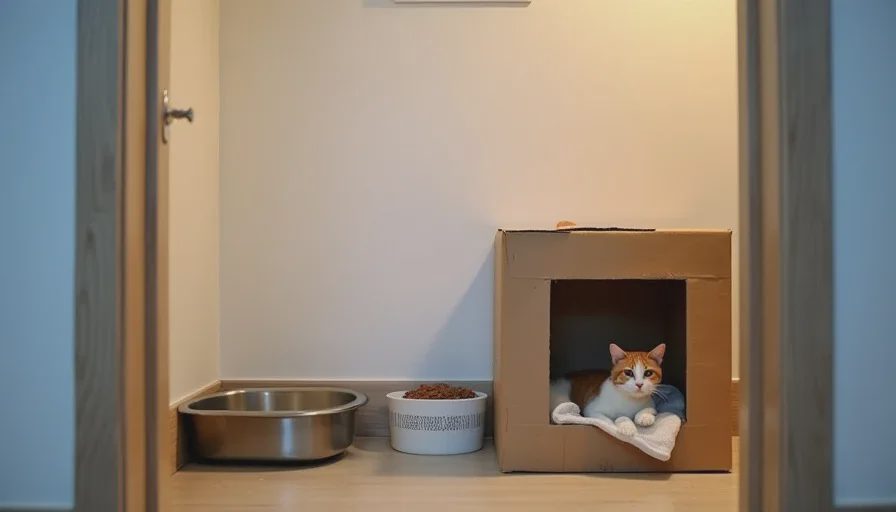
The First 72 Hours — What I Got Wrong
I'm a veterinarian. I know how to introduce cats. I've counseled hundreds of clients through the process. And I still made mistakes, because doing it in your own home with your own children crying "Is he out yet?" every twenty minutes is a different experience entirely.
My first error was underestimating Mabel. She's a calico, and if you know calicos, you know they have opinions. I set Oscar up in our guest bedroom with food, water, litter, and a hiding box. I swapped scent blankets between Mabel and Oscar for two days. On day three, I cracked the door to let them see each other. Mabel walked in, looked at Oscar, and hissed so loudly that Otis burst into tears in the hallway. I had told the kids to stay upstairs. They did not stay upstairs.
What I Should Have Done Differently
The table below captures what I planned versus what actually happened:
Step | What I Planned | What Actually Happened | Lesson |
|---|---|---|---|
Scent swap (Days 1–2) | Swap blankets twice daily | Did it once, got busy at clinic | Consistency matters more than technique |
Visual intro (Day 3) | Crack door, 5-minute sessions | Mabel barged in, 30-second disaster | Use a baby gate, not a cracked door |
Kids' involvement | Keep them upstairs during intros | They snuck down every time | Tell kids the truth — it takes weeks, not days |
Feeding proximity | Feed on opposite sides of door | Forgot one meal, cats got anxious | Set phone reminders, don't rely on memory |
The biggest takeaway: even as a professional, the presence of my family disrupted my protocol. Multi pet household tips work on paper, but real homes have children who open doors and spouses who forget to close gates. Build your plan around human error, not around the ideal scenario.
Month Two — When It Actually Worked
The turnaround happened at about five weeks. I started feeding Mabel and Oscar on opposite sides of a baby gate, gradually moving their bowls closer. One evening, Adam was watching TV and both cats walked into the living room, sat on opposite ends of the couch, and fell asleep. Nobody hissed. Nobody ran. Adam looked at me and said, "Okay. He can stay."
That moment mattered because it wasn't just about the cats — it was about the whole household adjusting. The multi pet household tips I give clients now always include this advice: wait for the moment when the skeptic in your family softens. That's when you know the introduction is working, not when the animals tolerate each other.
The Cost Nobody Expected
Adam's financial concerns turned out to be partially right and partially wrong. Here's what Oscar's first year actually cost us:
Expense | Amount | Notes |
|---|---|---|
Initial exam + vaccines | $45 | Clinic discount |
Neuter surgery | $0 | Done at clinic, no charge |
Food (annual) | $340 | Premium wet + dry |
Litter (annual) | $210 | Added a second box |
Scratching post + tree | $180 | Mabel wouldn't share hers |
Emergency visit (UTI) | $320 | Month seven — not preventable |
Total Year One | $1,095 | Below average thanks to discounts |
The UTI was the wildcard. Urinary issues are common in male cats, and no amount of planning prevents them. That $320 visit was the moment Adam stopped saying "I told you so" and started saying "Good thing we have the emergency fund."
What I Tell Clients Now
Three years later, Oscar and Mabel aren't close companions — they coexist. They sleep in the same room, occasionally play-chase, and share a sunbeam by the window. That's a successful multi-cat outcome. Not cuddling. Not grooming each other. Just peaceful coexistence with occasional hissing when someone gets too close to the food bowl.
When clients ask me about adding a third pet, I give them this honest framework:
Get genuine consensus from every adult in the household — not reluctant agreement, not "fine, whatever." Reluctant spouses become resentful spouses when the vet bill arrives.
Write down the financial commitment before the animal arrives — Include food, litter, annual vet care, and a $500 emergency buffer. Show it to everyone.
Plan the introduction for a time when you're home for several days — Don't adopt the week of a business trip or a school recital.
Give it six weeks minimum — If anyone tells you cats will "figure it out" in a weekend, they're wrong. Plan for a month and a half of managed separation.
Involve kids age-appropriately — Ruby helped with feeding and scent swaps. Otis was too young and mostly added chaos. Adjust expectations by age.
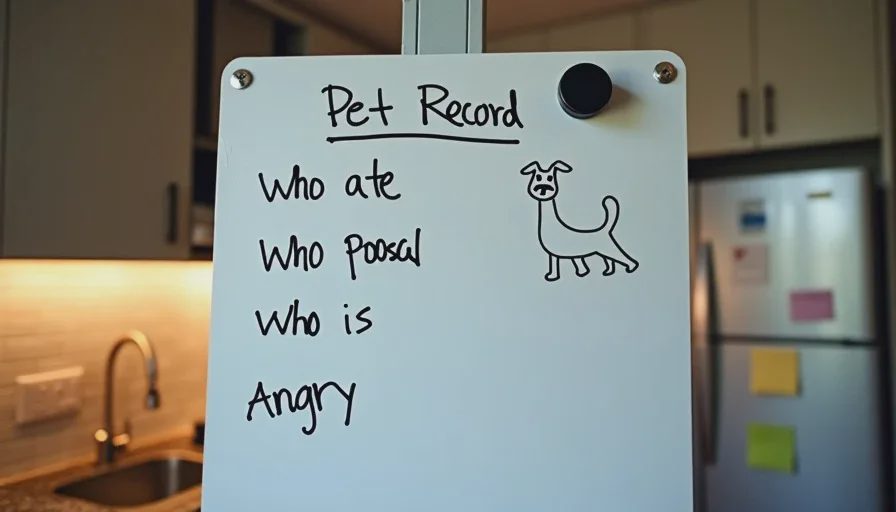
Adding Oscar wasn't seamless, and it wasn't cheap, and Adam still grumbles about the litter box situation. But last Sunday, I found all three animals — Biscuit on the rug, Mabel on the cat tree, Oscar on the windowsill — in the same room, in the same sunbeam, asleep. Nobody was sulking. I added it to the kitchen whiteboard: "Everyone ate. Everyone pooped. Nobody's sulking." That's a good day in a multi-pet home.




No comments yet — grab the first one.