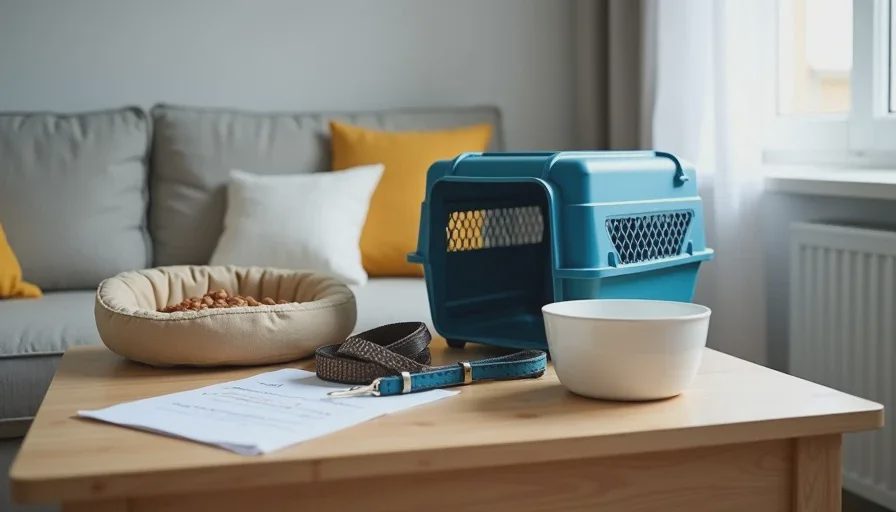
Every week, a family sits in my exam room with a brand-new puppy or kitten and the same confession: "We were so excited we didn't think about anything until last night." If you're reading this before the big day, you're already ahead of them. This first pet checklist is exactly what I wish every new owner had seven days before a pet walks through their door — because the week before is the week that decides how smoothly the first month goes. Most of the problems I see in new-pet households aren't caused by the pet; they're caused by decisions made in a hurry with no plan.
I'm Willa Sutter, DVM, and I've been doing this long enough to know that preparation isn't about being fancy — it's about being ready. I've been that owner, too. When we brought Copper home as a puppy, Ruby was eight and Otis was five, and the one thing that saved us was having the setup done before he arrived. And I've had plenty of practice since: between my husband Adam, the kids, the dogs Biscuit and Copper, the cats Mabel and Oscar, and Peanut the guinea pig, my house runs on those same whiteboards and routines. A good start beats a late fix, and never is that more true than in the week before a new pet comes home.
The Decisions to Make Before You Buy Anything
Before you spend a dollar on gear, there are four decisions that shape everything else. A good first pet checklist starts with decisions, not shopping. Skip these and you'll be making them under pressure in a store aisle with a tired puppy in your arms.
Who's the Responsible Adult?
Name the one adult in the house who owns the daily basics — feeding, walking, litter box duty, vet reminders. That doesn't mean they do everything, and it shouldn't be one parent silently absorbing all the work. But having one clear "pet lead" means nothing falls through the cracks. In my house, I'm the vet, so I run medical questions, and everyone else handles feeding and cleanup. When we got Biscuit, we wrote the routine on the kitchen whiteboard so there was no "I thought you did it" problem.
What Does Your Week Look Like?
Puppies need a potty break every couple of hours at first. Kittens are lower-key but still need meals, play, and a clean box daily. Before you commit, ask yourself honestly: who's home during the day, who can cover vet visits, and what happens on the one day of the week the whole house is out from 8 a.m. to 6 p.m.? Having a dog-walker or a neighbor lined up in advance is the difference between a calm week and a crisis. A senior dog might be fine with long stretches alone; a young puppy is not, and it's not fair to blame the puppy for that.
Vet, Emergency, and After-Hours: Who's on Your List?
Seven days out, you should already have a chosen veterinarian with an appointment booked for the first week home. Call around and ask two questions: do they have same-day slots for new patients, and what do they charge for a new-pet exam? Also write down the nearest 24-hour emergency clinic — not the one you like, the one that's actually open at 2 a.m. And if you're on a budget, call the same clinics and ask about wellness plan options before you're in crisis mode. That phone call takes ten minutes now and saves an hour of frantic Googling later.
House Rules You Can Agree On Together
Decide before the pet arrives: is the couch off-limits, which rooms are closed, where does the crate live, who sleeps where at night. If adults in the house disagree, the pet will get confusing signals. Sit down, write the short list of rules on the whiteboard, and agree to present a united front. Pets read consistency like we read a map — it's how they learn.

The One-Week-Out Checklist: Seven Days, Five Tasks
Here's the first pet checklist schedule I hand out in my exam room. It's deliberately small — one meaningful task per day for five days, then two rest days before the big arrival.
Day | Task | Why It Matters |
|---|---|---|
Day 1 | Book the first vet visit and choose an emergency clinic | Locks in your safety net before you need it |
Day 2 | Pet-proof the house: electrical cords, plants, cabinets | Removes the dangers a curious pet finds in five minutes |
Day 3 | Shop the essentials list below | Avoids the "we forgot the bowl at 9 p.m." problem |
Day 4 | Set up the safe zone: crate or room, bed, water, litter box | Gives the pet a calm basecamp from day one |
Day 5 | Walk the route: where food is stored, where the leash lives | Turns your new routine into a habit before the pet arrives |
Day 6 | Rest — no errands, get sleep | You'll need the energy |
Day 7 | Prepare the house for the first 24 hours: quiet, no guests | Sets up the calmest possible arrival |
The Essentials Shopping List (Nothing More)
You don't need a cartful of gear, and I'd rather you spend your money on quality basics than a closet full of toys the pet ignores. Here's the list I actually use:
Food and bowls — buy the same food the shelter or breeder was feeding, and switch slowly over a week if you want to change brands.
A crate or carrier — sized so the pet can stand, turn around, and lie down. This is for safety and calm, not punishment.
A collar, harness, and leash (dogs) — or a carrier that doubles as a safe transport (cats).
A bed or blanket — ideally something that smells like home, which the shelter can usually provide.
ID tag and a microchip appointment — the tag is immediate, the chip is permanent backup.
Basic supplies: litter box and litter (cats), potty pads or cleaning spray (dogs), grooming brush, nail clippers.
An old towel or two for messes — you will need these.
What you can skip: fancy beds you'll be washing in a week, puzzle toys for a pet that's still settling, three kinds of treats, and anything that claims to be a quick fix for training or behavior. Those claims almost always come with fine print.
The Money Conversation Nobody Wants to Have
The single most common reason pets are surrendered in my community is money stress, and I'd rather you know the numbers now. A first year with a dog runs several hundred dollars for food, supplies, vaccines, and the neuter, before you count anything unexpected. Cats are a bit less, but not dramatically so. The two expenses that surprise everyone are dental cleanings (they're not optional grooming; they're anesthesia and surgery) and emergencies, which can run into the hundreds or thousands for something like a foreign body surgery.
That's not a scare tactic — it's a budget line, and a first pet checklist that leaves money out isn't doing you any favors. Seven days out, do two things: set aside a starter emergency fund, even if it's modest, and get real quotes on pet insurance. I'll tell you plainly that insurance is worth comparing carefully for young pets, especially dogs, because it protects against exactly the bills that break budgets. If you can't swing it, an emergency savings account works too — but pick one, on purpose, before you need it.
What to Do With the Week Before: a Short Script
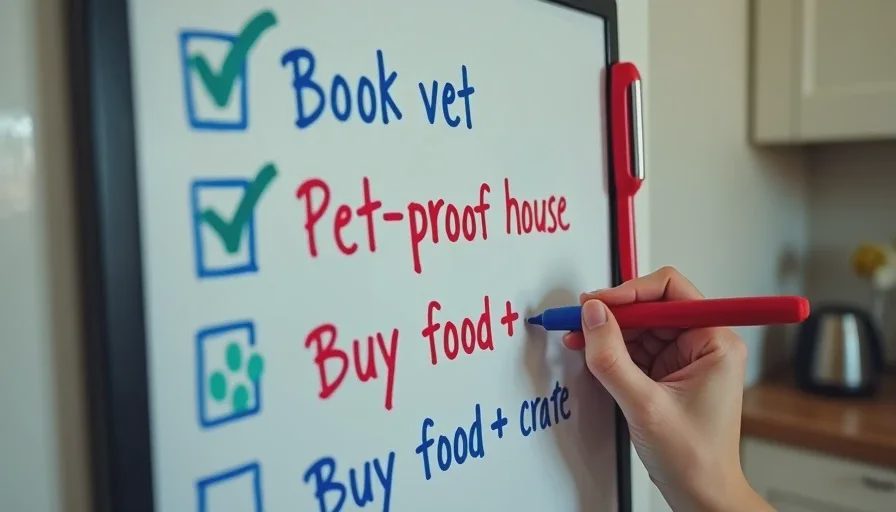
If you only have a little time, here's the priority order from this first pet checklist: book the vet, pet-proof the house, and buy the food and the crate. That's the core of the checklist. Everything else — the toys, the decorations, the "welcome home" banner — is lovely but secondary.
The Night Before: A Calm Mind Beats a Full Cart
The night before your pet comes home, do this: put the crate or bed in a quiet room, fill the water bowl, lay out the food, and put the phone numbers (vet, emergency clinic, your pet lead) somewhere visible. Then go to bed. That's the last line of the first pet checklist, and it's the one that sets the tone for everything after. The first 48 hours will be full of new smells and new faces, and the calmer you are, the calmer the pet will be. Animals read your stress like weather, and a relaxed human is the single most reassuring thing you can offer.
Remember why you're doing this. You're about to give an animal a home, and that is one of the few genuinely good things a person can do. There will be messes, there will be moments of doubt, and there will be a night when you wonder if you're doing it all wrong. You're not. You're exactly where every good pet owner starts. A good start beats a late fix.



No comments yet — grab the first one.