If you are wondering how much is allergy testing for dogs, you are probably also wondering whether every itchy paw requires an expensive specialist visit. Take a breath. Allergy testing can be useful, but it is not always the first step, and the final bill depends on the kind of allergy being investigated, your location, and the testing method your veterinarian recommends.
Dogs can react to fleas, food ingredients, pollen, mold, dust mites, cleaning products, or materials they touch. Similar symptoms can also come from parasites, bacterial infections, yeast, dry skin, or another medical problem. A good start beats a late fix, so your veterinarian will usually begin with an examination and a careful history before ordering a test.
How much is allergy testing for dogs in typical cases?
For many US pet owners, allergy testing itself costs roughly $200 to $600. A blood allergy panel often falls near $200 to $400, while intradermal skin testing performed by a veterinary dermatologist commonly costs about $350 to $800 or more. These figures are broad planning ranges, not a promise from every clinic. A specialist appointment, sedation, skin scraping, infection treatment, or follow-up visit can increase the total.
The important distinction is that testing does not diagnose every type of allergy. Blood and skin tests are mainly used to identify environmental allergens after a veterinarian has diagnosed atopic dermatitis, sometimes called environmental allergy disease. They do not reliably prove that a particular food is causing a reaction. Food allergies are usually investigated with a strict elimination diet followed by a controlled food challenge.
Before you approve testing, ask for an itemized estimate. A useful question is, “What will the complete diagnostic process cost, including the examination, sample collection, laboratory fee, medications, and follow-up?” That simple script can prevent an unpleasant surprise at checkout.
What is included in the allergy workup?
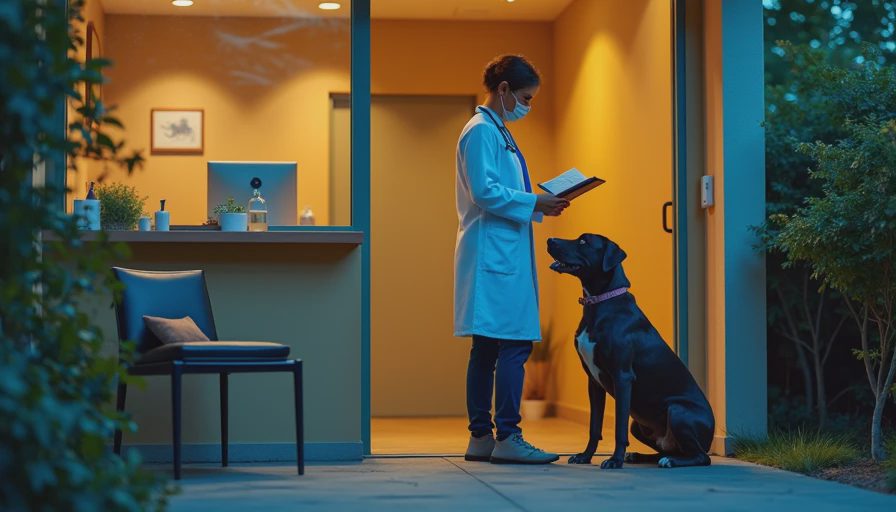
The first visit may cost about $75 to $150 for a routine examination, although specialty consultations can run from $150 to $300 or more. Your veterinarian may check the ears, paws, belly, face, and skin folds, because allergic dogs often develop secondary yeast or bacterial infections in those areas.
Depending on the findings, the clinic may recommend a flea-control review, skin scraping, tape preparation, ear cytology, or treatment for an existing infection. Each add-on might cost approximately $25 to $150. These tests can feel like extra steps, but treating an infection often makes a dog more comfortable and clarifies which symptoms remain.
If food allergy is suspected, a prescription elimination diet may cost $60 to $150 per month for a medium-sized dog. The trial commonly lasts eight to twelve weeks. During that period, treats, dental chews, flavored medications, table scraps, and access to another pet’s food can interfere with the result. It is less exciting than a blood draw, but it is often the most meaningful way to evaluate food sensitivity.
Comparing blood testing and skin testing
Blood testing is convenient because a sample can be collected during a regular appointment and sent to a laboratory. Results may list reactions to numerous environmental allergens, such as grasses, weeds, trees, molds, and dust mites. The test can be a reasonable starting point when a dog has a consistent pattern of seasonal or year-round itching.
Intradermal skin testing is often considered the more specialized approach for environmental allergies. A veterinary dermatologist usually clips a small area of the dog’s side, injects tiny amounts of allergens under the skin, and observes the local reactions. Because the dog must remain still, sedation or anesthesia may be recommended. That adds to the bill and requires attention to the dog’s health history.
Neither test replaces the veterinarian’s judgment. A positive result means the immune system recognized an allergen; it does not automatically mean that allergen is causing every symptom. For example, a dog can test positive to several pollens while also having fleas or an untreated ear infection. The best plan matches test results with the season, the home environment, the physical examination, and the dog’s response to treatment.

How much is allergy testing for dogs after the test?
The testing fee is only one part of the long-term budget. If environmental allergies are confirmed, your veterinarian may discuss medicated shampoo, antihistamines, prescription anti-itch medication, allergy injections, or an oral immunotherapy product. Monthly costs can range from $30 to $150, depending on the dog’s size, medication, frequency of flare-ups, and whether a specialist manages the case.
Allergy injections are customized from the identified allergens and may cost about $100 to $300 initially, with ongoing refill or administration costs. Some families give injections at home after receiving instruction, which can reduce appointment fees. Other dogs do well with tablets or an injectable anti-itch medication, while some need a combination approach during pollen season.
Ask your veterinarian to separate one-time costs from recurring costs. A clear estimate might show $300 for the consultation and test, $80 for an infection treatment, and $50 to $120 per month for maintenance. Seeing those numbers together helps a family choose a plan that is both medically sensible and financially manageable.
Ways to lower the total cost
You do not need to chase every possible test on the first visit. Bring a written symptom timeline that shows when itching began, whether it is seasonal, which body areas are affected, and what food, shampoo, flea product, or medication your dog has already tried. Photos of red paws or a rash during a flare can help when the skin looks calmer at the appointment.
Use reliable flea prevention exactly as directed, even if you have not seen fleas. One bite can trigger intense itching in a sensitive dog, and fleas are easy to miss. Wash bedding regularly, rinse shampoo thoroughly, and wipe pollen from paws after outdoor walks. These steps will not cure every allergy, but they can reduce flare-ups and make prescribed treatment work better.
You can also ask whether your primary veterinarian can manage the initial workup before referring you to a dermatologist. A referral is appropriate when the diagnosis is unclear, infections keep returning, or standard treatment has not provided enough relief. It is not a failure to start with your family clinic; it is often the most efficient route.
When allergy testing is worth considering
How much is allergy testing for dogs becomes easier to answer once you know what decision the result will support. Testing is more useful when itching is persistent, seasonal, difficult to control, or repeatedly complicated by ear and skin infections. It can help identify allergens for a customized immunotherapy plan, especially when basic care has not been enough.
Testing may be premature when your dog has fleas, an obvious infection, or a short-lived rash that is already improving. Your veterinarian may first treat those problems and reassess. Seek prompt care for facial swelling, trouble breathing, widespread hives, repeated vomiting, or collapse, since those signs can indicate a serious allergic reaction rather than ordinary chronic itch.
The practical answer to how much is allergy testing for dogs is usually a starting budget of $200 to $600 for testing, plus the examination and any treatment needed around it. Ask what the test can answer, what it cannot answer, and what you will do with the results. With that conversation, allergy care becomes a step-by-step plan instead of a frightening mystery.





No comments yet — grab the first one.