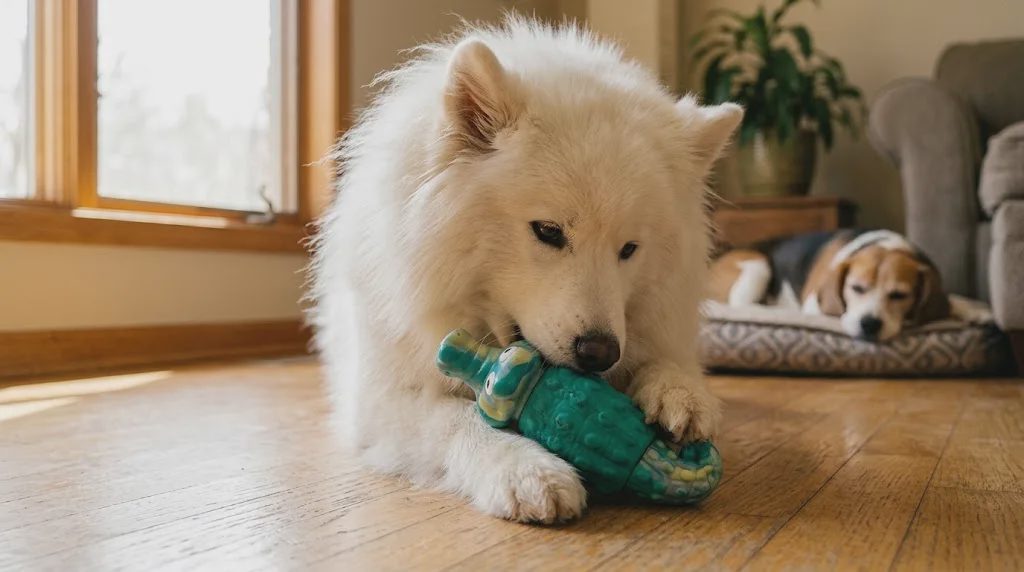
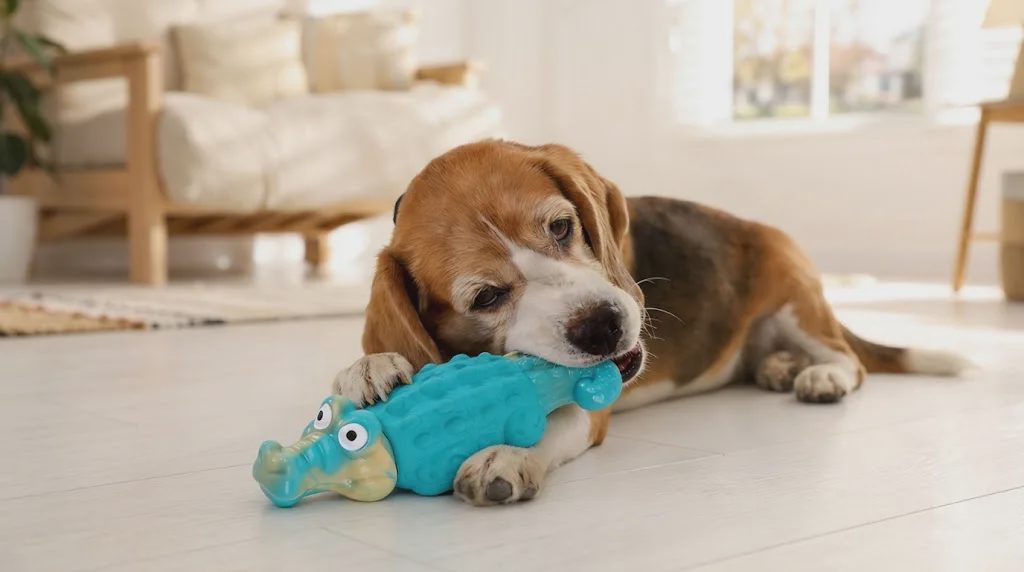
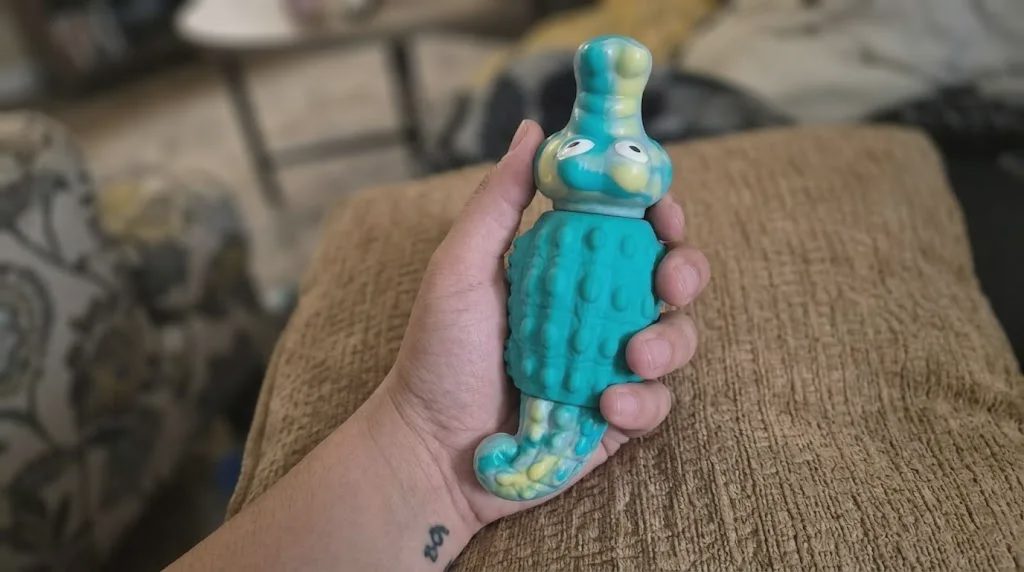
Biscuit is a 45-pound mix who treats most soft toys as temporary. After she finished her third plush in one weekend, the pattern was clear: she needed a more durable outlet, and the rest of the house needed less cleanup. Copper, our other dog, prefers gentler mouth play. In a home with two dogs and two cats, that difference matters. I started looking at dog chew toys that could handle determined chewing without turning into scattered pieces every few days. The WinTour Tough Dog Toys for Aggressive Chewers in the medium shark shape arrived for $9.99. I wanted to see how long it would actually last under regular use.
🛒 Check Price & Reviews on Amazon
What I Look For Before I Leave Any Chew Toy Out
I do not treat “durable” as the same thing as “indestructible.” No chew toy is permanent under a determined dog. The practical questions I use are straightforward:
Does the dog actually engage with it for more than a few minutes?
Does the material hold together without dropping large pieces or sharp edges?
Can I clean it easily after use?
Does it stay interesting enough that the dog returns to it instead of looking for furniture or other household items?
Can it be supervised and rotated so it does not become the only option?
Those checks matter more in a multi-pet house, where one dog’s intensive chewing can create noise, competition, or leftover debris that affects everyone else. A toy that keeps one dog occupied without creating extra work for the rest of the household is more useful than one that simply claims to be tough.
First Weeks of Real Use
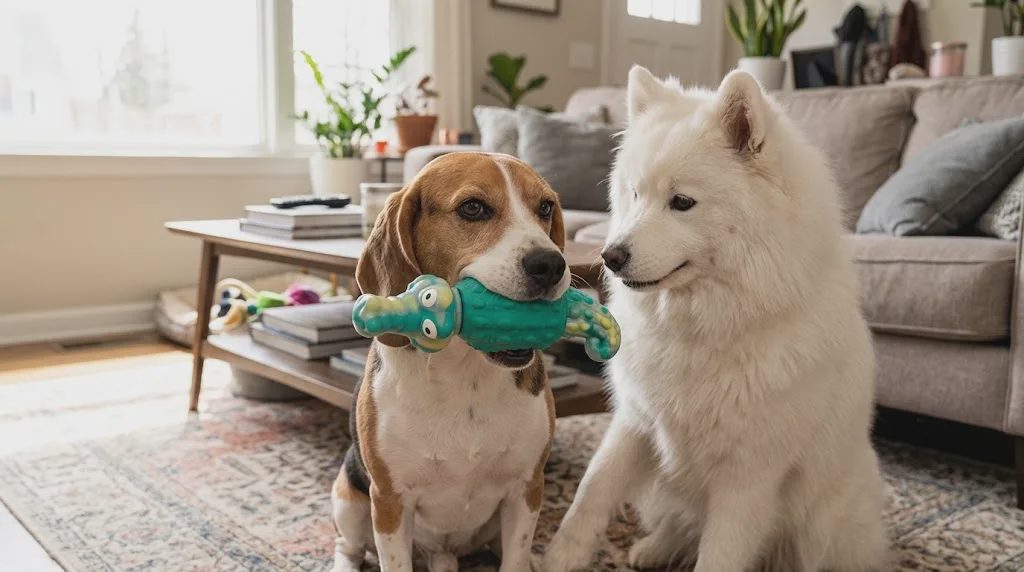
I rinsed the toy with warm soapy water before the first session. On day one, Biscuit took it immediately. She worked the middle section first, then shifted pressure to the harder ends. The two different materials became useful right away because she does not chew evenly. Copper investigated during supervised play and handled the size without difficulty. The weight kept the toy from skittering across the floor the way lighter plastic options sometimes do, which was easier to manage around the cats’ usual resting spots.
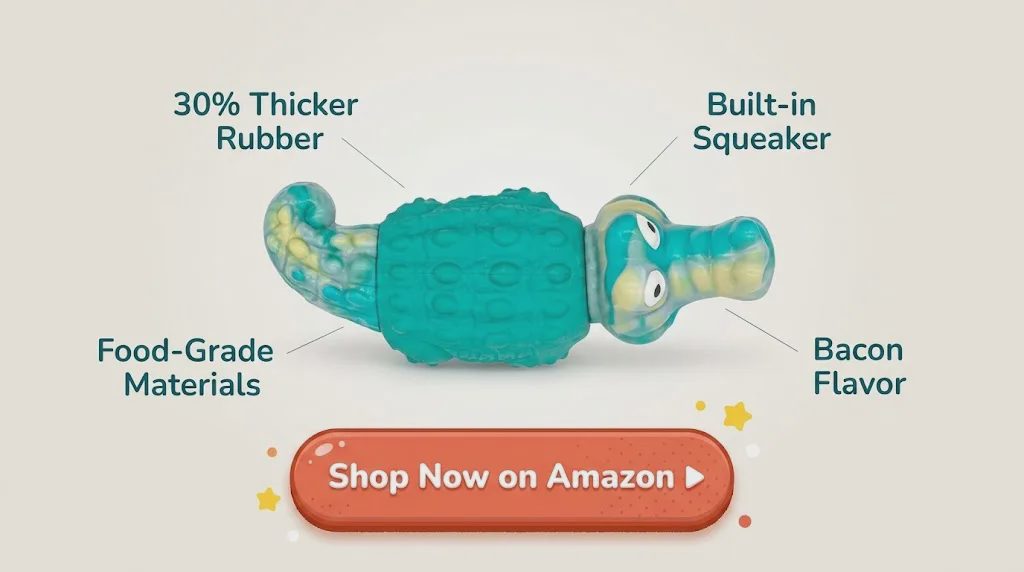
By the end of the first week the built-in squeaker was still working. Many dog toys with squeakers lose their sound quickly; this one continued. Biscuit returned to it regularly during the times I made it available. Copper used it less intensely but did not ignore it. I stored it off the floor at night so no one turned it into an unsupervised 3 a.m. project. The cats occasionally glanced over when the squeaker sounded, then went back to whatever they were doing.
After roughly three weeks of regular supervised sessions, the rubber surface showed clear wear. At that point, I hadn’t seen large pieces separate from the toy. The structure itself remained intact and the squeaker still functioned. I continued the same routine: visual checks every few days, rotation with other toys, and an occasional thin layer of dog-safe peanut butter worked into the textured grooves for longer engagement. The texture gave her something to work at for longer, without the treat immediately sliding off.
What Held Up and What Didn’t
After about a month of regular use the rubber surface was rougher, but the overall shape stayed usable. That is longer than the softer toys Biscuit finished in a day or two. The denser middle section and harder ends together gave her enough resistance to stay engaged without the immediate shredding we saw with thinner materials. She still preferred to start in the middle and move outward, so the dual construction matched the way she actually works a toy.
The toy is not a fetch item. The weight makes it better for stationary chewing and short interactive sessions than for long throws. It also has no soft or plush component, so a dog who prefers stuffing destruction may simply walk away. I treat it strictly as a supervised chew option, not an all-day free-access toy. Leaving it out unsupervised would defeat the point of the safety habits I already follow with every chew item.
Cleaning has been straightforward—warm water and soap after use. The surface does not trap debris the way some textured soft toys do, which makes rotation and storage simpler in a busy household.
🛒 Check Price & Reviews on Amazon
The Checks I Would Not Skip
Even with a tougher construction, I still follow the same habits I use with any chew item:
Inspect for cracks, sharp edges, or pieces that could break off.
Remove the toy if the material begins to separate in large sections.
Supervise, especially in the early sessions while learning how a particular dog works a new shape.
Rotate rather than leave one toy available all day.
Nothing lasts forever under a determined chewer. That is not a limitation of one particular toy; it is simply how dogs work when they are motivated. The useful question is never whether a chew toy can survive indefinitely. It is whether the toy lasts long enough, under the real conditions of your household, to make sense for the time, money, and attention you put into it.
Is Around $10 Worth It?
At roughly $10 I do not expect a chew toy to last months of heavy daily use. What I care about is how often I have to replace it. A cheaper option that disappears in a day or two can quickly become less appealing when you add the cost of replacements and the cleanup. After several weeks of regular supervised chewing, this one was still intact enough to keep using. The value depends less on the sticker price and more on that replacement frequency.
Results always depend on the individual dog’s chewing style and how consistently the toy is supervised and rotated.
🛒 Check Price & Reviews on Amazon
Who This Fits—and Who Should Skip It
This type of durable chew toy works for households that need a solid supervised option during the early weeks with a new dog or when adjusting to a second dog’s energy. Biscuit’s determined style and Copper’s gentler approach both found a use for it. The weight and dual materials helped keep sessions more contained and reduced the amount of time spent redirecting her away from other household items.
Skip it if your dog only engages with soft, destructible toys, or if you need something very lightweight for travel or fetch. It is not a permanent solution and it is not magic. It is a practical chew option that held up longer than the softer alternatives in our house under regular use. Dogs with very different chewing preferences may still need more than one type of toy available on rotation.
The Bottom Line
In a house with two dogs who chew differently, having one option that lasts weeks instead of hours changes the daily calculation. The WinTour medium shark gave Biscuit a durable outlet and required less frequent replacement than the soft toys she finished quickly. The rubber surface wore; the structure held. The squeaker kept working. That trade-off made sense for our supervised use.
It is not indestructible and it is not permanent. No chew toy that sees regular use by a determined dog will stay pristine forever, and this one is no exception. The rubber surface showed wear after weeks of sessions; the structure held longer than the soft toys that disappeared in a day or two, but it still required the same supervision and rotation I apply to every option in the house. That distinction matters more than any claim of toughness.
A good start beats a late fix.




No comments yet — grab the first one.