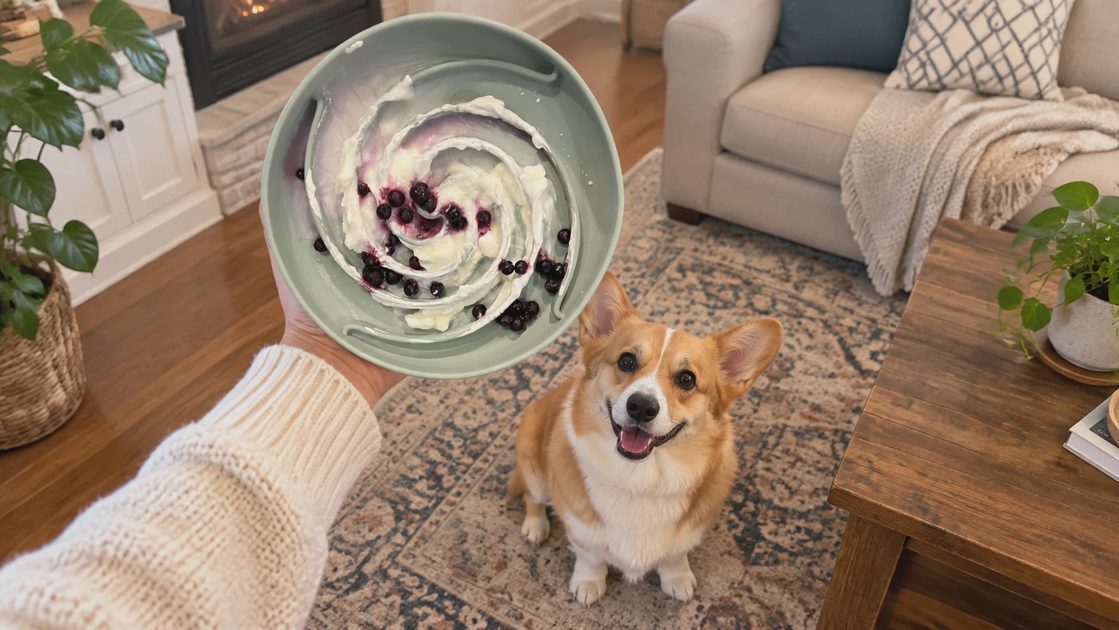
Copper used to finish a full meal in about thirty seconds. The second the food hit the bowl he was already looking up at me, ready for the next round. In a multi-pet kitchen that pattern creates its own problems: he finishes first, starts circling the other dishes, and the quieter animals get pushed out of their space. I see the same sequence often enough with first-time owners that I treat it as one of the more common “is this normal?” questions that lands at the front desk.
A dog that eats quickly is not automatically a medical emergency. Many healthy dogs are simply efficient. What matters more is what happens after the meal—and whether eating that fast is causing problems for the dog or disrupting the rest of the household. If it is, slowing the meal can be a simple, practical adjustment rather than a dramatic intervention.
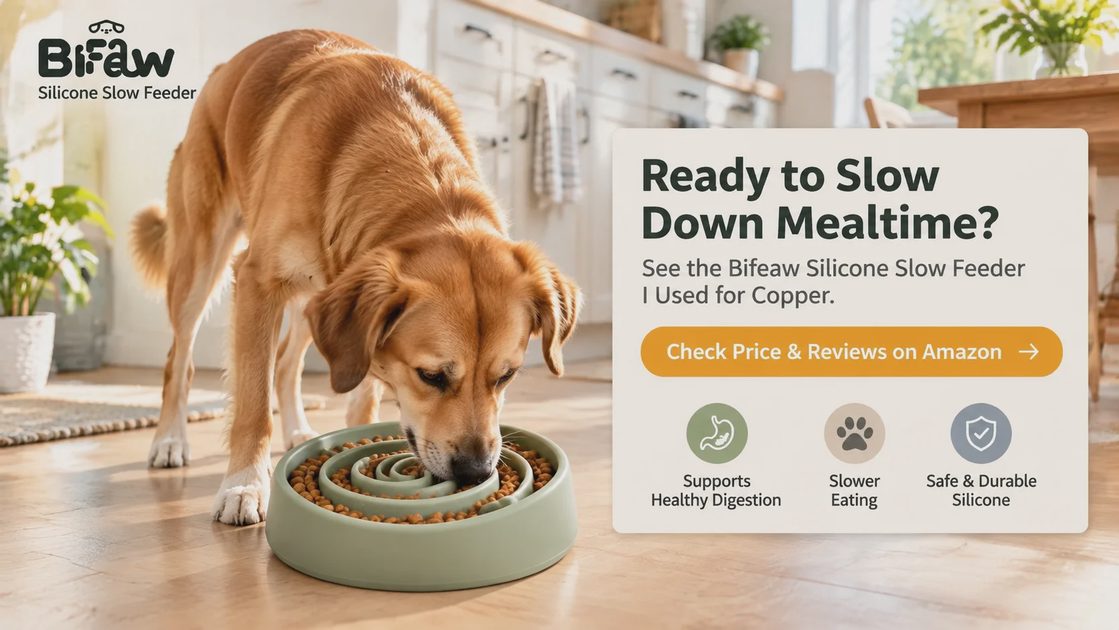
🛒 Check Price & Reviews on Amazon
When Fast Eating Is Just a Habit—and When to Pay Attention
In my clinic I heard this concern almost weekly. New owners, or households adding a second dog, notice the speed and immediately worry. The honest answer is more measured.
Fast eating by itself is often just a habit. Some dogs have always been that way. Others learn it in multi-pet homes where the first one finished gets the leftovers or the attention. What I ask owners to watch is the aftermath. Mild gas or a short period of restlessness after a very fast meal can be normal. Repeated regurgitation right after eating, visible discomfort, or a sudden change in appetite alongside the speed is worth a call to the vet.
I do not treat every quick eater as a medical case. The goal is to give the dog a steadier pace when the current one is creating friction—either for the dog’s comfort or for the rest of the household.
Why I Tried a Slow Feeder for Copper
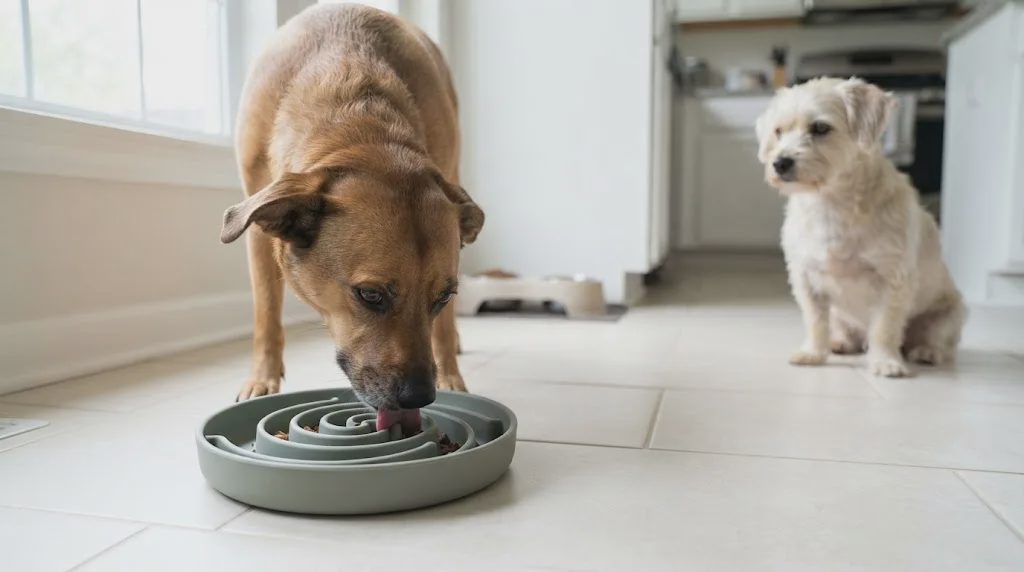
Copper shares the kitchen with Biscuit, our older dog, and two cats who are always interested in whatever food is available. Once he finished, he would patrol. Biscuit, who is slower and more polite, started eating less steadily. The cats would approach the feeding area. The pattern looked more like a multi-pet mealtime management issue than a medical one.
I had already tried the usual first steps: feeding in separate rooms, splitting the daily ration into smaller portions, and staggering the timing so one dog finished before the next started. Those helped, but the thirty-second vacuum remained. A dog puzzle feeder was the next practical experiment—not because it promised to solve every problem, but because it addressed the speed itself without requiring constant supervision.
What a Slow Feeder Actually Does
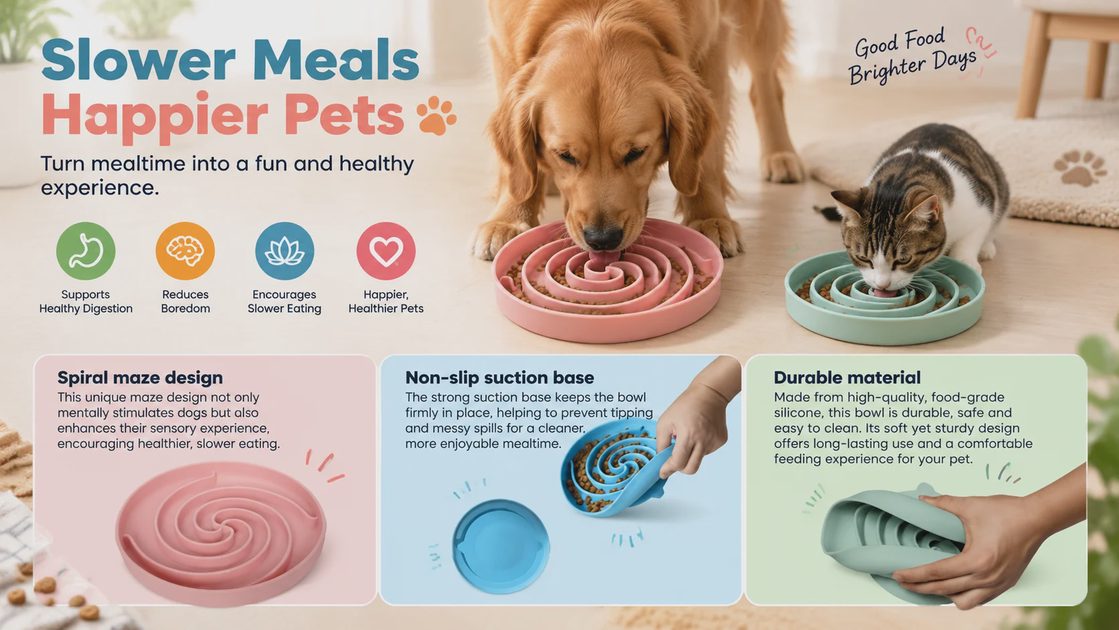
A slow feeder simply inserts physical obstacles between the dog and the food. Ridges, mazes, or raised patterns force the animal to use tongue and nose to extract kibble or soft food one small portion at a time. Meal duration stretches. The dog still gets the same calories; the delivery is just less frantic.
Many owners notice that a longer meal reduces the frantic “scarf and look for more” cycle. The maze also gives some dogs a little more to work through instead of finishing the meal automatically. None of this makes a slow feeder a treatment for serious gastrointestinal disease. It is simply a feeding tool that can help when speed itself is the issue.
My Experience With the Bifeaw Silicone Slow Feeder
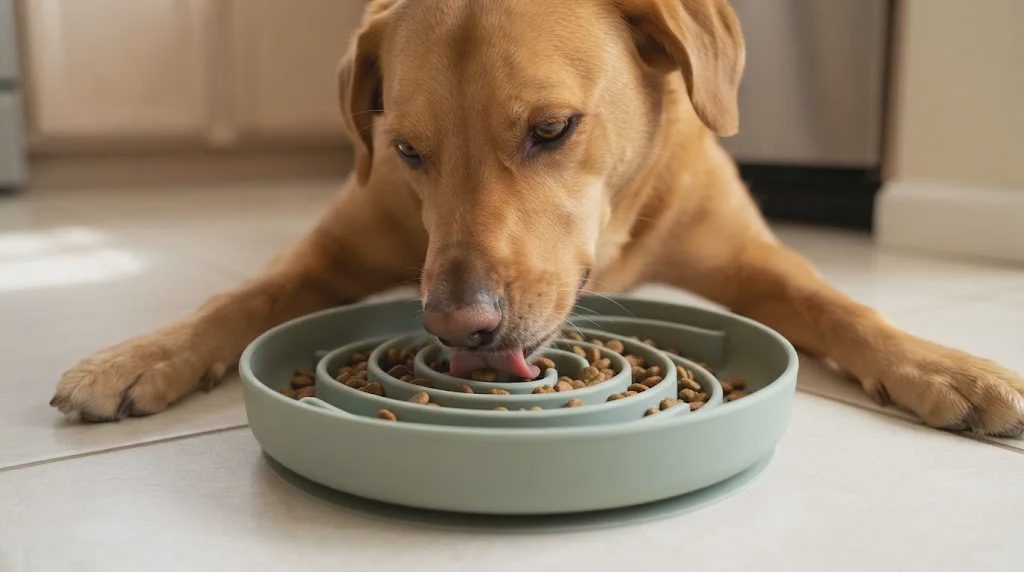
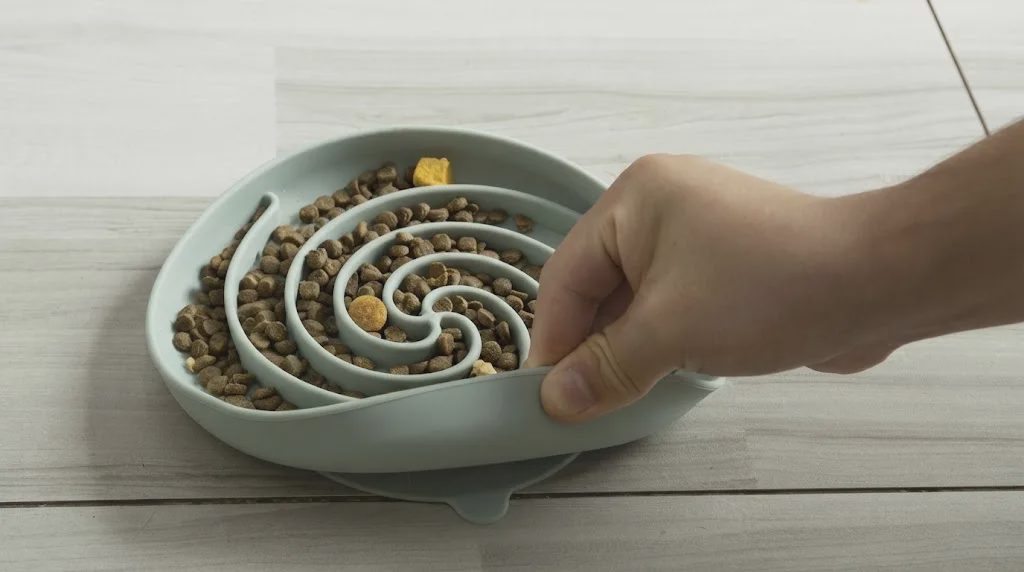
The specific bowl I brought home is the Bifeaw silicone dog bowl in grey-green. It measures about 7.5 inches across and holds roughly one to two cups. The interior is a raised maze rather than a flat bottom. The material is soft, food-grade silicone. It is dishwasher-safe and has a non-slip base with suction that keeps it anchored on tile or clean wood.
I paid $9.99. The first morning I put half a cup of Copper’s regular kibble into the maze. He sniffed, pawed once, then settled into a steady rhythm of licking and nudging. The meal that used to take thirty seconds now took four to five minutes. That was enough of a change that Biscuit could finish without pressure and the cats stayed out of the immediate zone.
Wet food and a small amount of homemade stew worked as well. The soft ridges hold moist food without the sliding that happens in some harder plastic mazes. After he finished I rinsed the bowl under the faucet; most residue came off with a pass of my fingers. On dishwasher days it goes on the top rack and comes out clean.
What Worked in Our Multi-Pet Kitchen
The biggest practical win was spatial. Because the bowl stays put, Copper no longer pushes it across the floor into Biscuit’s space. I can set the two dogs a few feet apart and they both finish without the usual post-meal patrol. The low profile and soft edge also make it harder for the cats to tip or claim.
One important point I tell multi-pet households: a slow feeder addresses speed. It does not replace separate feeding zones. If one dog is already finishing first and then moving toward the other animals’ dishes, you still need physical distance or staggered timing. The bowl helps the fast eater, but the household management still matters.
Capacity is right for a medium dog’s portion. For a smaller dog you simply put less food in; the maze still functions. For a larger dog who needs more volume, two smaller meals in the same bowl keep the slower pace without overflow. The non slip dog bowl base holds on clean tile. On textured mats the suction is less reliable, so I keep it on a hard surface.
🛒 Check Price & Reviews on Amazon
What I Didn’t Love
No tool is perfect. A very food-motivated dog will still finish faster than a more thoughtful eater, though still slower than a flat bowl. Large kibble pieces can occasionally lodge in the tighter grooves; I break those up before serving. Soft silicone can show light scratches over time if a dog digs hard. It is not a heavy outdoor feeder, and it is not designed for a true power chewer who treats every object as a toy. Supervise the first few uses.
How to Choose a Slow Feeder for Your Dog
Before you buy any slow feeder, run through a short checklist:
In a multi-pet home, will you still need separate feeding zones?
Does the capacity match one normal meal for your dog’s size?
Is the maze difficulty appropriate, or will it frustrate a less persistent eater?
Can the bowl stay put on your floor surface?
Will it handle the food you actually feed—dry, wet, or mixed?
Is the material easy to clean daily?
Does your dog have a history of chewing bowls or toys aggressively?
A soft silicone puzzle like the one I used answers most of those points for a medium dog in a busy kitchen. It will not answer them for every household.
Is This Type of Slow Feeder Right for Your Dog?
This style of dog slow feeder bowl is a good fit if you have a medium or smaller dog who eats too quickly and the speed is creating secondary friction in the household—post-meal restlessness or tension with other pets. It also works for first-time owners who want a low-effort way to stretch mealtime.
Consider something else if your dog is a determined chewer who destroys soft toys, if you need a high-capacity outdoor feeder for a large breed, or if the dog is already a picky eater who may simply walk away from any obstacle. And if the dog shows repeated regurgitation, visible discomfort, or a sudden change around food, the first step is a conversation with your veterinarian, not a new bowl.
A Few Things I’d Tell a First-Time Dog Owner
One thing I tell new owners is that most mealtime problems are solvable with small adjustments before they become big ones. Separate the animals if needed. Split the daily food into two or three smaller servings. Add a simple obstacle only if the speed itself is still the issue. Watch the aftermath more than the stopwatch. And remember that a calm kitchen is usually the result of consistent routines rather than any single product.
The Bottom Line
If your dog finishes a meal in under a minute and the rest of the household feels the ripple effects, a slow feeder is one practical tool among several. The Bifeaw silicone version I used stretched Copper’s meal from thirty seconds to several minutes, stayed put on the floor, and cleaned without drama. It did not rewrite his personality and it does not replace veterinary advice when something looks wrong. It simply removed one daily source of friction in a multi-pet kitchen.
Start with observation. Adjust the routine. Add a tool only if it fits the actual problem.
A good start beats a late fix.




No comments yet — grab the first one.