When a cat disappears under the bed after a move, adoption, loud party, or new-pet introduction, first-time owners often worry that something is terribly wrong. Usually, the cat is looking for control. A safe space for cats gives them a predictable place to rest, observe, and recover without being chased, handled, or surprised. I recommend creating one before your cat needs it. A good start beats a late fix.
What a safe space really does
A safe space is not a punishment room or a place where your cat is banished. It is a private home base with familiar smells, reliable resources, and an easy exit. Cats feel safer when they can choose whether to interact, rather than being pulled from a hiding place by a well-meaning child.
The best safe space for cats is quiet but not completely isolated. A spare bedroom, office, large closet with ventilation, or calm corner of a living room can work. Avoid placing it beside a washing machine, near a busy doorway, or next to a dog’s crate. Sudden noise and constant foot traffic make a retreat less useful.
Choose a location where your cat can see what is happening from a distance. Many cats prefer a covered bed on the floor plus a higher perch, such as a sturdy cat tree or cleared bookshelf. Height provides information and confidence. A cat that can watch family life without being in the middle of it often becomes more willing to join in.
Setting up the room without overspending
You do not need a designer cat room. Start with a washable bed or folded fleece blanket, a cardboard box turned on its side, fresh water, and a litter box placed well away from food. Add one or two familiar items, such as a blanket from the carrier or a toy that already smells like home.
For a small apartment, a safe space for cats can be a covered crate, a section of a quiet bedroom, or a screened-off corner behind furniture. Leave enough room for the cat to stand, stretch, turn around, eat, drink, use the litter box, and retreat from view. A $15 cardboard scratcher and a $25 enclosed bed can be more valuable than a costly tower if they are positioned thoughtfully.
Keep food and water separate from the litter box. Cats are fastidious, and many will avoid a box that is beside their feeding station. Scoop at least daily, use unscented litter when possible, and avoid filling the room with air fresheners, essential oil diffusers, or strong cleaning products. Some concentrated oils can be harmful to cats, and heavy fragrance can make a room feel unsafe.

Check the room from a cat’s level. Look for dangling cords, loose window screens, narrow gaps behind appliances, toxic plants, and unstable furniture. Close toilet lids and secure blind cords. The goal is simple: your cat should be able to rest there without encountering a preventable hazard.
Helping a new cat settle in
For a newly adopted cat, use the safe space for cats as a landing zone for the first several days. Bring the carrier inside, close the door, and let the cat come out on their own. Sit quietly nearby for five or ten minutes, read aloud, or offer a soft greeting. Do not reach into a hiding box unless there is a genuine safety concern.
Some cats eat immediately. Others wait until the house is quiet. Place a small meal near the hiding area, then give privacy. You can track practical signs without hovering: food disappearing, water being used, urine and stool in the box, and gradual exploration. A nervous cat may take several days to act social, especially after shelter transport or a long trip.
Visit briefly and consistently. A calm routine teaches the cat that people arrive, offer good things, and leave without forcing contact. Tossing a treat nearby is often better than holding it directly in front of a frightened face. When the cat begins approaching, let them sniff your hand before attempting a gentle stroke.
Making introductions in a multi-pet home
A safe space for cats is especially important when another cat, dog, or energetic child already lives in the house. Keep pets separated at first. Exchange bedding between animals so they can learn one another’s scent before face-to-face meetings. Feed meals on opposite sides of a closed door, gradually moving bowls closer as everyone remains relaxed.
For a dog introduction, keep the dog leashed and allow the cat to remain behind a secure barrier with a clear escape route. Never hold the cat in place for a “meet and greet.” That removes the cat’s ability to leave and can turn ordinary caution into panic. Reward the dog for looking away, lying down, or responding to their name.
With two cats, provide more than one litter box, feeding location, resting area, and elevated perch. A useful starting point is one litter box per cat plus one extra, spread through the home rather than lined up in one room. Resource separation reduces ambushes and gives a shy cat options.
Knowing when the setup needs adjusting
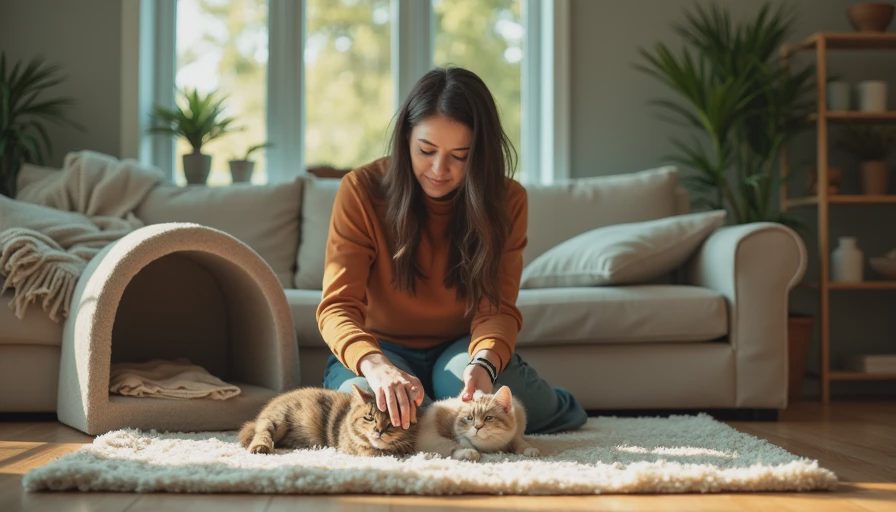
Watch body language rather than expecting immediate cuddling. A relaxed cat may blink slowly, groom, stretch, eat normally, or rest with paws tucked under the body. Concerning stress signs include persistent hiding, repeated hissing at people who are not approaching, refusal to eat, vomiting, diarrhea, urine outside the box, or frantic attempts to escape.
Move resources closer to a hiding area if the cat is too nervous to reach them. Conversely, increase distance from children, dogs, or noisy equipment if the cat never relaxes. Try a different litter texture, a larger box, a lower-sided box for an older cat, or a second scratching surface. Small changes often reveal what the cat is asking for.
A pheromone diffuser can be a reasonable optional tool, but it is not a substitute for separation, safe routes, and clean resources. Avoid punishment, forced handling, and spraying water. Those methods can suppress visible behavior while increasing fear.
If a cat has not eaten for about a day, is straining to urinate, has trouble breathing, becomes extremely lethargic, or repeatedly vomits, contact a veterinarian promptly. Cats can become ill while owners assume they are merely shy. A vet can help separate normal adjustment from a medical problem.
A routine that builds confidence
Use the retreat at predictable times. Refresh water in the morning, scoop the box, offer food, and spend a few quiet minutes nearby. In the evening, provide play with a wand toy if the cat is interested, then offer a meal. This hunt-play-eat rhythm can help many cats settle before bedtime.
As confidence grows, leave the door open and let the cat explore one additional area at a time. Keep the original retreat available even after the cat becomes outgoing. It may become a favorite nap room, a refuge during thunderstorms, or a quiet place when visitors arrive.
The best safe space for cats changes with the household. A kitten may need cord protection and a barrier from a dog. A senior cat may need warm bedding and low-entry litter boxes. A newly adopted adult may need several quiet weeks. There is no prize for making a cat socialize faster. Give the animal choices, protect those choices, and let trust build through repetition.
When you are preparing for adoption, moving, or adding another pet, set up the safe space for cats before the carrier comes through the door. Spend a modest amount on secure basics, observe carefully, and adjust one detail at a time. That calm preparation helps the whole household, including the humans who are learning that a quiet first week can be a very successful one.



No comments yet — grab the first one.