
Any new pet owner guide should address the myths that drain your wallet before your pet even settles in — because misinformation is expensive. In my 14 years as a general-practice veterinarian in Colorado Springs, I've watched well-meaning first-time owners spend hundreds of dollars on things that don't help, skip things that do, and fall for marketing that preys on their anxiety. I'm Willa Sutter, DVM, and I'm going to walk you through five myths I hear every single week in my exam room, what's actually true, and where your money should go instead. My household — two dogs, two cats, a guinea pig, a husband named Adam, and two kids who want every pet they see — lives on a budget. I practice what I preach.
Myth 1: Grain-Free Food Is Healthier for Every Dog
Grain-free food is not inherently healthier, and in some cases it's actively harmful. This is the myth I combat most often, and it's the one that costs owners the most money because grain-free formulas typically cost 20–40% more than standard food.
The grain-free trend started with human nutrition trends crossing over into pet food marketing. The concern was that dogs have food sensitivities to grains like corn, wheat, and soy. In reality, true food allergies in dogs are uncommon — affecting roughly 1% of the population — and when they do occur, the allergen is usually a protein (chicken, beef, or dairy), not a grain.
The Real Cost and the Real Risk
Factor | Grain-Free Food | Standard Quality Food |
|---|---|---|
Average cost per pound | 5.00 | 3.50 |
Annual cost (medium dog) | 1,825 | 1,278 |
Health risk | FDA investigation linking certain grain-free diets to dilated cardiomyopathy (DCM) | No elevated DCM risk |
Nutritional adequacy | Meets AAFCO standards but may lack taurine | Meets AAFCO standards with complete amino acid profile |
The FDA began investigating a potential link between grain-free diets and dilated cardiomyopathy in dogs in 2018. While the investigation is ongoing and the relationship is not fully understood, the point is this: removing grains provides no benefit for the vast majority of dogs and may carry risk. You're paying more to potentially harm your pet. Unless your veterinarian has diagnosed a specific grain allergy, feed a standard, AAFCO-compliant food from a reputable manufacturer.
Myth 2: You Need Every Supplement on the Shelf
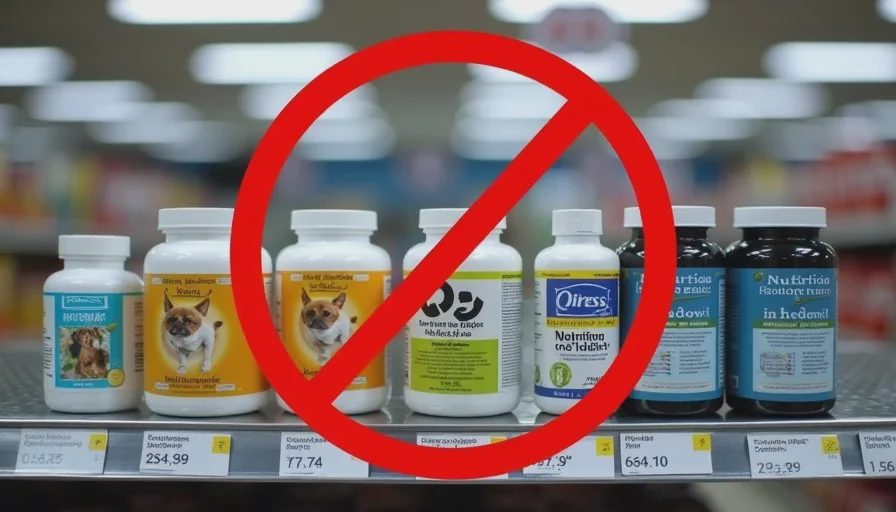
Supplements are largely unnecessary for healthy adult pets eating a complete diet. The supplement industry for pets has exploded in recent years, and I see owners walking into my clinic with grocery bags full of probiotics, joint supplements, omega oils, vitamins, and calming chews — none of which were recommended by a veterinarian.
Here's the truth about what most pets actually need:
Puppies and kittens on complete food — No supplements needed. AAFCO-compliant foods are formulated to provide complete nutrition. Adding vitamins can actually cause imbalances, particularly excess calcium in large-breed puppies, which causes skeletal problems.
Healthy adult dogs and cats — No supplements needed unless a specific deficiency has been diagnosed. Save your money.
Senior dogs with arthritis — Joint supplements like glucosamine and chondroitin have mixed evidence but may help. Use veterinary-formulated products, not pet store brands with unverified ingredient amounts.
Pets with diagnosed conditions — Follow your vet's recommendations. Period. Not the pet store employee's, not the internet's.
A good start beats a late fix. Spend your money on quality food and preventive care, not on supplements that line the shelves but don't line up with evidence.
Myth 3: Pet Insurance Is Always a Waste of Money
Pet insurance is not always a waste — for many owners, it's the difference between treating a serious illness and making a heartbreaking financial decision. The myth that pet insurance "never pays out" comes from people who bought the wrong policy or didn't understand what was covered.
I used to be neutral on pet insurance. After 14 years of watching clients face 8,000 emergency surgery bills, I'm now firmly in favor — with caveats. Here's what matters:
What to Look For | What to Avoid |
|---|---|
Coverage for hereditary and congenital conditions | Policies that exclude breed-specific conditions |
Continuing coverage for chronic conditions year over year | Policies that drop coverage when a condition becomes "pre-existing" at renewal |
Clear payout structure (reimbursement percentage and deductible) | Wellness add-ons that cost more than they pay out |
No age limits for enrollment (or enroll early) | Policies that only cover accidents, not illness |
Real Numbers From My Practice
Last year, I treated a four-year-old Lab for a gastrointestinal foreign body — he ate a corn cob. The surgery and overnight care totaled 250 deductible and 90% reimbursement. Her out-of-pocket cost: 3,400. I've also seen owners without insurance decline necessary treatment because they simply couldn't afford it. That's the real cost of skipping coverage.
Premiums typically range from 60 per month for dogs and 35 for cats, depending on age, breed, and coverage level. Does that mean every owner needs it? If you have $5,000 in dedicated emergency savings for your pet, you may self-insure. If you don't, insurance is a reasonable way to manage catastrophic risk.
Myth 4: The Cheapest Food Is Fine Because "It's All the Same"
The cheapest food is not fine, and it's not all the same — but the most expensive food isn't automatically better either. The key is finding the intersection of nutritional adequacy and reasonable price, and that requires reading labels rather than trusting marketing.
Here's what actually matters when evaluating pet food:
What Matters | What Doesn't Matter |
|---|---|
AAFCO statement of nutritional adequacy | Buzzwords like "natural," "holistic," or "human-grade" |
Named animal protein as first ingredient (e.g., "chicken" not "meat") | Grain-free labeling |
Manufacturer transparency about sourcing and testing | Celebrity endorsements |
Calorie content per cup (affects how much you feed) | Bag color, design, or shelf placement |
Veterinarian or veterinary nutritionist on staff | Number of flavors available |
I feed my own dogs a mid-priced brand that meets all the criteria above. It costs about 4.50 per pound for a boutique brand with prettier packaging, or I could pay $0.90 per pound for a discount brand with minimal protein quality. The mid-priced option gives me the nutritional quality my dogs need without the marketing markup.
The Hidden Cost of Cheap Food
Cheap food isn't just lower quality — it can cost you more in veterinary care over time. Dogs on poor-quality diets often develop skin issues, ear infections, and gastrointestinal problems that require repeated vet visits. I've treated dogs whose chronic ear infections resolved entirely after switching from a discount food to a quality mid-tier brand. The food cost went up 400 per year.

Myth 5: You Can Skip Preventive Care to Save Money
Skipping preventive care doesn't save money — it defers and amplifies costs. Heartworm prevention costs 15 per month. Heartworm treatment costs 1,500 and requires months of restricted activity. Flea prevention costs 20 per month. Treating a flea infestation in your home costs 500 for extermination plus veterinary treatment for skin infections.
Here's the honest cost comparison I give every first-time client:
Annual wellness exam + vaccines: 350 — catches problems early, maintains immunity
Monthly heartworm prevention: 180/year — prevents a $1,500 treatment
Monthly flea/tick prevention: 240/year — prevents infestation and tick-borne disease
Annual fecal parasite test: 45 — detects intestinal parasites before they cause weight loss or diarrhea
Dental cleaning (as needed): 700 — prevents tooth extraction (600 per tooth) and systemic infection
When Prevention Pays for Itself
My dog Biscuit is ten years old. His annual wellness exam two years ago caught early kidney changes on bloodwork. We adjusted his diet and started monitoring. That 2,000+ crisis had we waited until he showed symptoms. I see this scenario play out in my clinic regularly — the owners who invest in preventive care spend less over their pet's lifetime than the owners who wait for emergencies.
The pattern is consistent across all five myths: spending wisely on proven, evidence-based care costs less than spending reactively on problems that prevention could have avoided. That's the real new pet owner guide in a nutshell — not buying everything, not buying the cheapest thing, but buying the right things at the right time.





No comments yet — grab the first one.