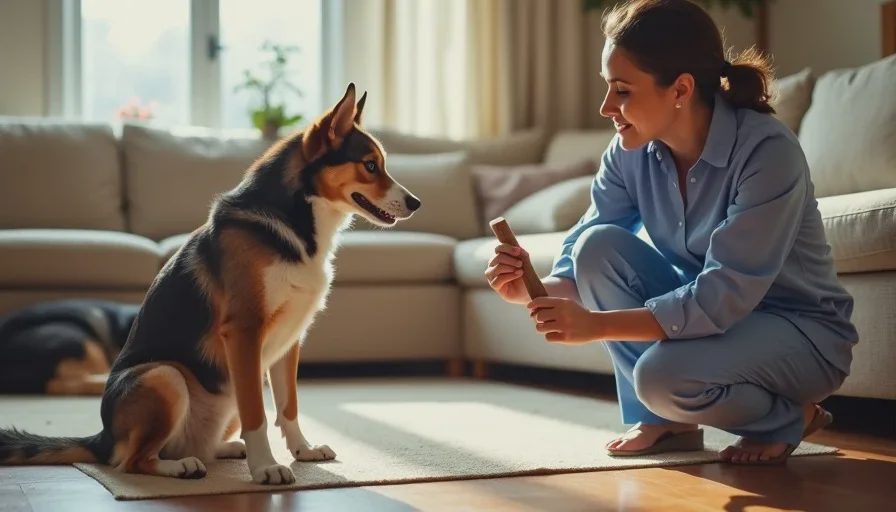
Resource guarding in dogs is one of those phrases that sounds scary and clinical, but what it actually means is simpler than you think: your dog is telling you that something matters to them and they're worried about losing it. I've seen it in the exam room a hundred times over my fourteen years as a vet — the growl over a bone, the stiff body over a food bowl, the flash of teeth when another pet walks past the toy pile. And almost every time, the owner is mortified, convinced they've failed somehow. You haven't. Let me walk you through what's really going on and what to do about it, especially when you've got more than one pet sharing your home.
What Resource Guarding Actually Is (and Isn't)
Resource guarding in dogs is a survival behavior, not a personality flaw. Every dog on earth is hardwired to protect the things they need to live: food, water, a safe place to sleep, and sometimes the people they love. A puppy who guards their bowl isn't being "bad" — they're being a dog, using the only language they have to say "please don't take this from me."
The key distinction I make with my clients is between guarding and aggression. Guarding is a warning system. It's the growl, the hard stare, the body blocking, the slow stiffening of the spine. Aggression is what happens when the warning system gets ignored. Most dogs would much rather warn you than bite you, and understanding that is the single most important shift in perspective you can make.
What guarding usually looks like at home:
Warning signal | What it means |
|---|---|
Freezing over the food bowl | "This is mine, I'm nervous" |
Growling when approached | "Back off, please" |
Stiff body, whale eye (showing the white of the eye) | "I'm uncomfortable" |
Snapping or air-snapping | "I've asked twice, now I'm serious" |
Guarding you from other pets | "You're my safe person" |
None of these signals mean your dog is a "bad dog." They mean your dog has a need that isn't being met, and they're trying to communicate it the only way they know how.
Why It Shows Up More in Multi-Pet Homes
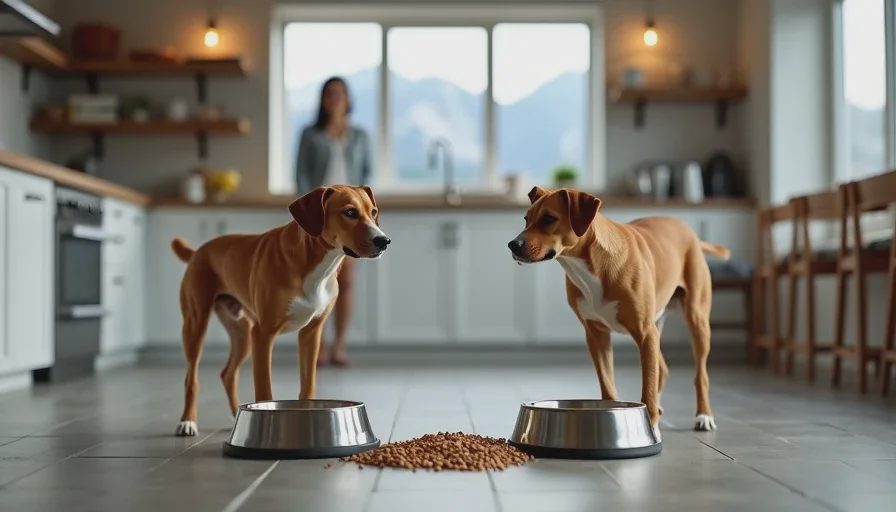
Here's the part that catches people off guard: a dog who never guarded a thing when they were an only pet will suddenly start guarding in a multi-pet household. It's not that the dog changed — it's that the stakes changed. When there's competition in the house, the value of every resource goes up in your dog's eyes. Food, toys, beds, your attention, even the spot on the couch all become more precious because another animal might take them.
I remember the first time Biscuit, my Australian cattle dog, stiffened over his rawhide when we brought Copper home as a puppy. Adam asked me, "Is he going to be okay?" and I had to laugh, because I'd been telling clients for years exactly what I said next: this is normal, this is manageable, and no, you don't need to panic.
How to Manage It Without Making It Worse
Here's the short version, and it might surprise you: you manage resource guarding in dogs by removing the fear, not by punishing it. Punishment — yelling, tapping the nose, grabbing the bowl away — almost always backfires. It teaches your dog that their worry was justified, because now a scary thing happens every time they're near their food. The guarding gets worse, not better.
The three rules I give every owner:
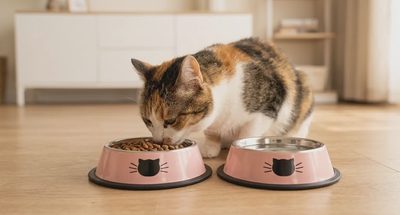
Manage the environment first. If you have two dogs, feed them in separate rooms or crates until things feel calm. Pick up toys after play. Trade high-value items instead of yanking them away.
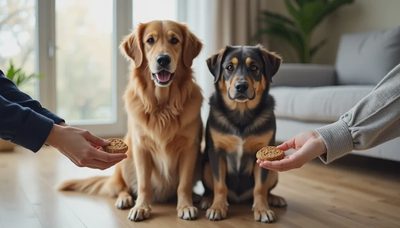
Trade, don't take. This is the foundation of everything. Before you ever take something from your dog, give them something better. Practice "drop it" with treats long before you ever need it in an emergency.
Teach them that your approach predicts good things. Walk near the bowl and toss a treat, then walk away. Do this a dozen times. Your dog starts to think "human near my food = bonus food," and the fear evaporates.
This is also where I tell people the phrase I've built my whole approach around: A good start beats a late fix. If you start the management strategies on day one, before there's ever a problem, you rarely need a big fix later. It's so much easier to prevent a habit than to break one.
When Your Pets Fight Over You
The most common version of guarding I see in multi-pet households isn't over food at all — it's over people. One dog body-blocks the other when you sit down. One cat hisses when the other hops in your lap. That's resource guarding in dogs (and cats, though they do it differently), with you as the resource. It's flattering for about a minute, and then it's exhausting for everyone.
My fix here is boring and effective: you're not a bone, so stop acting like a contested one. Stand up when they posture. Redirect the pushy one to a sit and reward them for polite distance. Spend one-on-one time with each pet daily so nobody feels like they have to fight for their share of you. Ruby and Otis think it's hilarious that Mabel the cat "runs the living room like a tiny dictator," but the one-on-one time is why Oscar still walks into the kitchen without a hiss.

When to Call a Professional
There's a line between guarding you can manage at home and guarding that needs professional help, and knowing where it sits will save you a lot of stress. Here's my honest threshold: if the warning has ever escalated to a bite, if the guarding is happening several times a day, if it's aimed at children, or if you feel physically unsafe even managing meals — that's the moment to call in help.
This is a hard conversation for a lot of owners, so let me normalize it: nobody should be ashamed of needing a professional for resource guarding in dogs. It's one of the most common behavior problems I refer out, and the success rates with a good positive-reinforcement trainer are genuinely high. What I tell people is to look for someone who uses rewards, not corrections, and who teaches management strategies you can actually live with. A trainer who wants to "dominate" your dog is a trainer you should walk away from.
When you need backup:
Any bite, even a skin-breaking one, ever
Guarding aimed at kids under ten
Multiple episodes per day despite management
Your own gut says "I'm not comfortable in my own kitchen"
Your vet can help you find a qualified behavior professional, and in some cases, medication is a legitimate part of the plan — not a failure, just a tool. I've prescribed anti-anxiety meds to plenty of guarding dogs over the years, and a relaxed brain learns way faster than a panicked one.
Building a Calmer Home Long-Term
The end goal isn't a dog who never feels a flicker of possessiveness — that's not realistic, and it's not even necessary. The goal is a dog who trusts that their people will keep them safe, so the warning system never has to turn on.
What that looks like in practice in my house: Biscuit still watches Copper when there's a bully stick in the room. But he doesn't stiffen, and Copper knows the drill — they each get their own chewing station, and both of them get a treat when I walk by. The fear is gone, and the routine handles the rest. Resource guarding in dogs rarely disappears entirely; it just stops being a problem.
So here's my ask: if you saw this in your own dog and felt a spike of dread, let it go. Your dog isn't broken, and you're not failing. You're just two beings who need a slightly different system. Set up the management, do the trading games, spend the five minutes a day on prevention, and let me tell you from years of exam room data — dogs in this situation improve far more often than people expect. A good start beats a late fix, and you're starting today. That counts for a lot.

No comments yet — grab the first one.