If you are wondering when to change puppy food to dog food, you are asking one of the most common questions I hear from new dog owners. The short answer is that most dogs switch when they reach adult size or are close to it, but the right timing depends on breed, expected weight, health, and the food itself. There is no prize for changing early, and there is no need to panic if your puppy needs a little more time.
The usual age for changing foods
Small-breed puppies often reach adult size between 9 and 12 months. Many can begin moving to an adult formula around their first birthday. Medium-breed dogs commonly transition between 12 and 15 months, while large and giant breeds may need puppy food until 18 to 24 months. Their bones and joints continue developing for longer, so a large-breed puppy formula is designed to provide controlled calories and carefully balanced minerals during that growth period.
These are useful guideposts, not rigid deadlines. A 10-month-old Chihuahua and a 10-month-old Great Dane are at completely different stages. When deciding when to change puppy food to dog food, look at your dog's expected adult weight rather than only the calendar. Your veterinarian can estimate that weight using breed information, current growth, body condition, and medical history.
The label also matters. A food marked for “growth” or “all life stages” is not automatically the same as an adult-maintenance formula. Large-breed puppies should generally eat food specifically labeled for growth of large-size dogs. If your puppy has been eating a prescription diet, has food allergies, or has a condition such as kidney disease, make the plan with your veterinary team instead of switching based only on age.
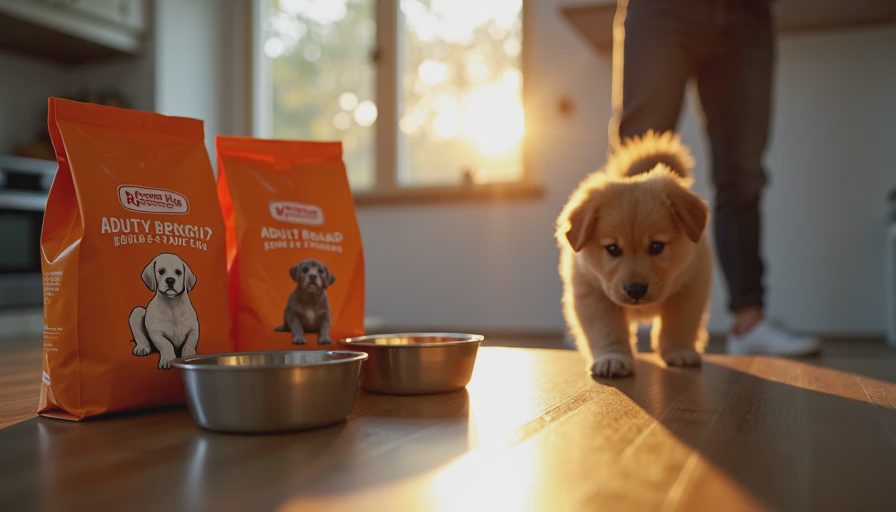
Signs your puppy is ready for adult food
Age is only one part of the decision. A puppy approaching the end of growth usually has a more stable appetite, a predictable body shape, and less rapid change in height and weight. You may notice that the puppy is filling out rather than shooting upward every few weeks. The ribs should be easy to feel under a thin layer of fat, with a visible waist when viewed from above. A round belly does not necessarily mean healthy growth; it can mean too many calories.
Your veterinarian may recommend changing food sooner if your dog is gaining excess weight, growing too quickly, or has digestive trouble on the current formula. On the other hand, a thin puppy, a late-maturing large breed, or a dog recovering from illness may benefit from staying on puppy food longer. When to change puppy food to dog food is best answered by growth progress, not by a bag's feeding chart alone.
Do not switch simply because your puppy has stopped acting hungry. Puppies are enthusiastic eaters, and many will happily consume more than they need. Overfeeding can add stress to developing joints and make later weight management harder. Measure meals with a standard measuring cup or kitchen scale, and adjust portions as growth slows.
How to make the transition without an upset stomach
Change foods gradually over about seven to ten days. For the first two or three days, mix roughly 75 percent of the old food with 25 percent of the new food. Then use a half-and-half mixture for another two or three days. Next, offer 25 percent old food and 75 percent new food before serving the new formula alone.
A slightly soft stool during the transition is not unusual. Repeated vomiting, watery diarrhea, refusal to eat, marked tiredness, or blood in the stool is different and deserves a call to your veterinarian. Puppies can become dehydrated more quickly than adult dogs, so do not wait several days if symptoms are significant.
Keep treats and table scraps steady while changing the main diet. If you introduce a new food and three new chews at the same time, you will not know which item caused a problem. Put the food in the same bowl, offer meals on the usual schedule, and keep fresh water available. A good start beats a late fix.
Choosing the right adult formula
Adult food should match your dog's size, activity level, and health needs. A relaxed 12-pound companion dog may need a small-breed adult formula with smaller kibble, while an active 70-pound hiking dog may need a different calorie density. Dogs that gain weight easily often do better with measured portions and a lower-calorie formula rather than unlimited access to food.
Look for a complete and balanced diet appropriate for adult maintenance. The ingredient list can provide useful information, but it does not tell the whole story about digestibility, calorie density, or nutrient balance. Brands such as Purina Pro Plan, Hill's Science Diet, Royal Canin, and Iams offer formulas organized by life stage and size. That does not make every product right for every dog, but it can make comparison easier.
When to change puppy food to dog food also depends on how much your dog exercises. A couch-loving adult may need fewer calories than the same breed competing in agility. Follow the package amount as a starting point, then watch body condition every few weeks. A food change should not become an excuse to keep the bowl full all day.

A simple household plan for the switch
Write down your dog's current food, daily amount, meal times, treats, and expected adult size. Bring that information to a wellness visit if you are uncertain. Ask three practical questions: Is my dog's growth nearly complete? Is the current body condition healthy? Does this adult formula provide an appropriate calorie level?
Buy a small bag first rather than committing to a large, expensive package. Store it in a sealed container, keep the original lot information, and introduce it while your puppy is healthy. A move, surgery, boarding stay, or stressful holiday is not the best time for a diet experiment.
After the transition, check weight and stool quality weekly for the first month. You should see normal stools, steady energy, and a body condition that stays lean. If the dog gains weight, reduce the measured portion modestly and reassess. If weight drops, appetite falls, or digestive signs continue, contact your veterinarian.
Common questions from first-time dog owners
Can a puppy eat adult food for one meal? Usually, a single meal is unlikely to cause a problem in a healthy dog, but adult food does not provide the growth-focused nutrition puppies need as their regular diet. The important issue is the ongoing feeding plan.
What if my puppy refuses the new food? Go back to the previous mixture for a few days and slow the transition. Warm water can soften kibble and release its aroma, but avoid adding rich human food that could create diarrhea or a picky habit.
What if my dog is a mixed breed? Use projected adult size, current growth, body condition, and veterinary advice. A DNA estimate can be interesting, but it should not replace a physical assessment.
The best answer to when to change puppy food to dog food is the one that protects steady growth and a healthy adult weight. Make the switch gradually, measure portions, and ask for help when your puppy's size or health makes the timing unclear. That calm, observant approach will serve your dog well long after the puppy months are over.



No comments yet — grab the first one.